Verify a Jacket Match From a Photo Before You Buy
Found a jacket by picture? Verify the cut, fabric, colour, construction, seller details, and return terms before you buy a visual-search match.
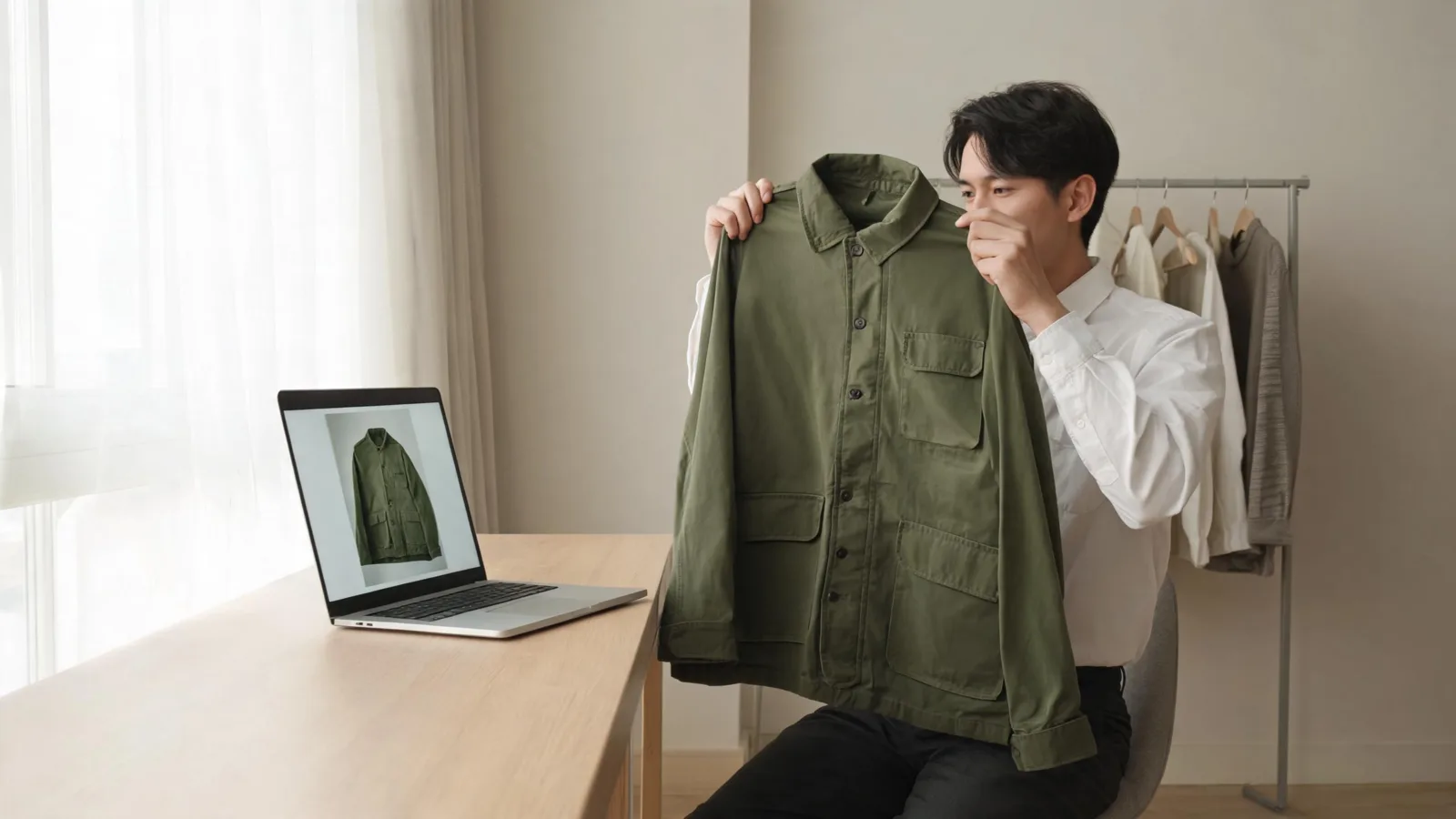
If you find a jacket by picture, treat the search result as a shortlist—not proof of an exact match. Compare the silhouette, collar, length, pockets, cuffs, fastening, fabric, and colour against the source image; then verify the retailer, measurements, materials, and returns policy before buying. Once a few candidates are credible, an AI clothes changer can help you compare their broad style direction on an authorized photo, but it cannot confirm fit or product facts.
Last updated: September 27, 2026 · about 7 min read
This is a companion to How to Find Clothes From a Photo. That article covers the discovery step: crop a garment, run visual search, and build a shortlist. Here, the question starts after results appear: which jacket is close enough to investigate, and which should you reject before checkout?
Search results can be visually similar while differing in the very details that make a jacket work: a short field jacket versus a longer overshirt, a pointed collar versus a stand collar, cotton twill versus coated polyester, or patch pockets versus flap pockets. The goal is not to prove that an image-search result is the original item. It is to make an honest buying decision with the evidence you can actually inspect.
Verify a jacket match in three passes
Use the same source image and the same candidate list for every comparison. That prevents a familiar-looking thumbnail from becoming a false “match.”
- Match the visible structure first. Compare the jacket's overall length, shoulder shape, collar, front closure, pocket count and position, cuff, hem, and any visible seam lines. A candidate that fails two major structure details is a lookalike, not a promising lead.
- Confirm the retailer-page facts. Open the candidate's own product page. Check the listed material, lining, care, measurements or size chart, colour name, current seller, availability, and the photographs provided by that seller. Do not rely on a marketplace thumbnail or a result-card description.
- Decide whether the remaining gap matters. If the colour, fabric, or pocket layout is different but you still like the candidate, call it a substitute and assess it on its own merits. If you need the original jacket's construction or provenance, keep looking rather than buying an almost-match under a mistaken name.
A visually similar jacket is not automatically the same product. An image search can surface leads; only the seller's current product page can supply its own listed details and policy.
Build a comparison that is specific enough to decide
Write down the features you can see before opening results. That keeps the source image in charge of the comparison.
| Detail in the source photo | What to inspect in a candidate | Why it changes the decision |
|---|---|---|
| Silhouette and length | Cropped, hip-length, thigh-length; straight, fitted, or oversized | A similar colour can hide a different proportion |
| Collar and front closure | Point, stand, spread, zip, buttons, snaps, placket | These control both the look and weather use |
| Pockets and cuffs | Patch, flap, welt, zip; ribbed, buttoned, elastic, plain | Small construction details often separate a match from a substitute |
| Fabric and surface | Seller-listed fibre, finish, lining, texture, weight | A photo cannot reliably identify composition or performance |
| Colour | Seller colour name and product photos in normal light | Filters, compression, and edits can shift a screenshot's colour |
| Seller and policy | Retailer identity, stock, delivery, return window and conditions | A good-looking item is still a poor choice if its purchase terms do not work for you |
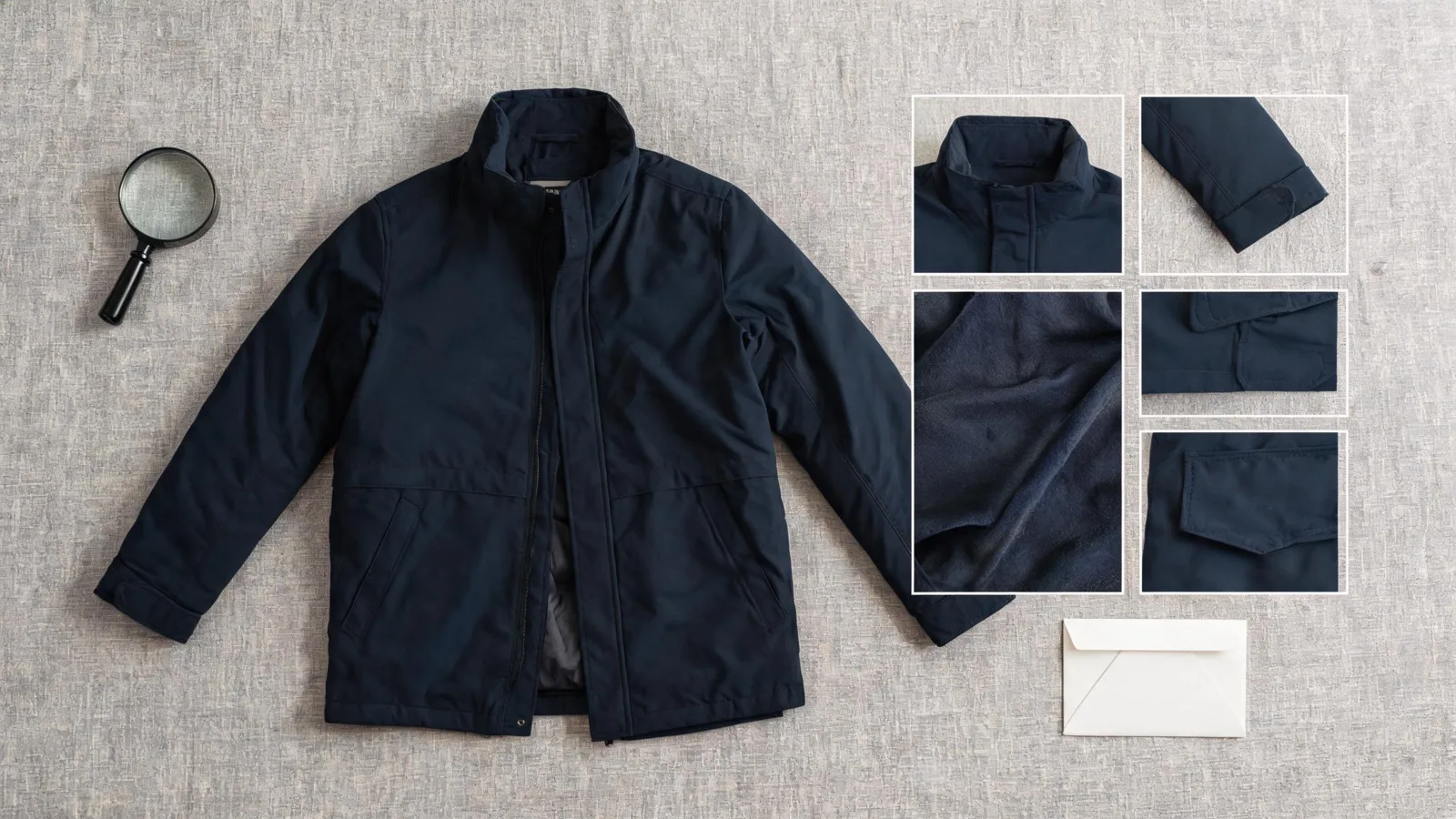
Editorial inspection scene: compare visible construction first, then confirm the product facts on the seller's page.
Use visual search without overclaiming it
Google's Lens guidance describes searching with an image. For jacket shopping, crop to the garment where possible and use the clearest source available. A full outfit shot can pull a search toward shoes, a bag, or the person's face instead of the jacket.
Search results often mix exact products, old listings, resale pages, editorial photos, and similar items. That is normal. It also means a title, thumbnail, or filename is not proof of an exact product, an authorized seller, or current stock. Prefer a retailer page that clearly identifies the item and shows multiple relevant images. If a listing has conflicting photos, missing material information, or a seller you cannot identify, leave it out of the shortlist.
A practical reject rule
Reject a candidate when any of these is true:
- The source's defining collar, closure, or pocket layout does not match.
- The retailer does not state material or give a usable size reference.
- The listing images do not support the title or the shown colour.
- You cannot identify the seller or find current delivery and return conditions.
- The search result claims an “exact” match but leads only to an unavailable, copied, or unrelated page.
This rule saves time. A visual match is worthwhile only when it leads to information you can use to buy responsibly.
Preview credible finalists without confusing style and fit
When a candidate passes the structure and retailer checks, you may want to see its broad direction on yourself. That is a separate decision from finding the item. Use an authorized adult photo, keep the source image and pose unchanged, and test one jacket direction at a time with virtual try-on.
Ask a narrow question: “Do I prefer an olive field jacket or a navy overshirt with this outfit?” Then inspect whether the face, pose, hands, hair, lighting, and background still read consistently. If the preview changes those elements, it no longer answers the jacket question fairly.
| A preview can help you compare | A preview cannot verify |
|---|---|
| Broad colour, silhouette, and styling direction on one image | Exact jacket SKU, authenticity, availability, material, sizing, comfort, or real-world fit |
| Whether you prefer one credible finalist over another | Whether the retailer's photos, claims, or policy are complete and accurate |
| Whether the jacket direction works with the rest of the visible outfit | How the garment performs in weather, stretches, layers, or wears over time |
For a reliable test setup, use how to photograph clothes for AI outfit edits. For an image that looks plausible but changes the person or scene, use the fault checklist in why AI clothes swaps look fake.
Finish with the purchase checks AI cannot do
Before ordering, return to the retailer page and confirm the information that has a real cost if it is wrong.
- Size: Compare your measurements with the page's chart, and note whether the chart describes the body or the garment. Do not infer size from a generated image.
- Material and care: Check the listed composition, lining, insulation, care instructions, and hardware. These are not reliably knowable from a screenshot.
- Seller and delivery: Confirm who sells and fulfils the order, the current price and currency, delivery location, estimated timing, and any duties or fees that apply.
- Returns: Read the current return window, item condition rules, final-sale exclusions, and any cost for return shipping. Keep a copy of the policy and order confirmation.
- Disclosure: If you keep a generated outfit preview for a mood board or client discussion, label it as a generated style reference. Do not pass it off as an approved retailer image or a verified product photograph.
We did not embed a YouTube video for this page. A DataForSEO YouTube search for “find this jacket by picture” produced a broad clothing-discovery tutorial and unrelated short-form fashion clips, but no verified video focused on the distinct post-search verification decision in this guide. Embedding the discovery tutorial would blur the boundary this article is meant to clarify.
Frequently asked questions
Can I find the exact jacket from a photo?
Sometimes, especially when the image is clear and the item is current. Often visual search returns lookalikes instead. Treat every result as a lead and verify the product page, seller, measurements, and policy before buying.
What details matter most when comparing jacket matches?
Start with the silhouette, length, collar, fastening, pocket placement, cuff, and colour. Then compare material, lining, hardware, measurements, and return terms on the retailer page.
Can an AI outfit preview prove that a jacket will fit?
No. An AI preview can help you compare a broad style direction on an authorized photo, but it cannot measure your body, verify the garment's sizing or construction, or replace a fitting room or size chart.
What if every jacket result looks similar but not exact?
Make a shortlist of credible lookalikes, identify the details you will not compromise on, and compare each retailer page against those criteria. Do not let a visual resemblance override an unclear seller, missing measurements, or unsuitable return policy.
Related guides
- Try the free AI clothes changer →
- How to find clothes from a photo
- Try a virtual try-on workflow
- AI clothes changer review checklist
Let the evidence decide the jacket
Use image search to build a shortlist, retailer pages to verify purchase facts, and an AI preview only to compare a look. Try a controlled outfit comparison with AIClothSwap →