Men's Headshot Outfit Checklist: First Checks
Use this men's headshot outfit checklist to choose formality, test a preview, and catch collar, fit, and background problems before the session.
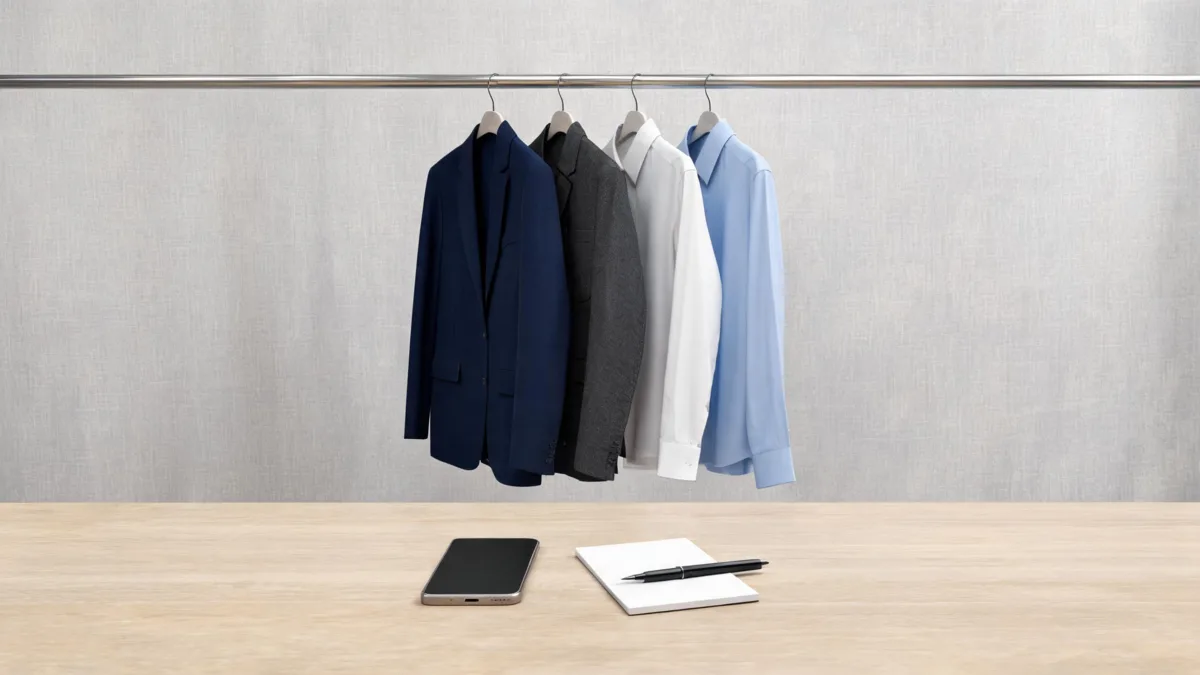
For a men's headshot, choose clothes that match your real work setting, fit cleanly at the shoulders and collar, and keep attention on your face. Test one formal option and one less-formal option before the shoot. An AI clothes changer can make that comparison quicker, but the final choice still needs a real garment, a clean fit, and a review in the actual lighting.
Last updated: September 1, 2026 · about 7 min read
Start with the job of the photo
Do not start by asking whether a suit is “best.” Start with where the headshot will appear and what the viewer should understand in the first second. A partner-page portrait, a law-firm bio, a startup team page, and an actor's casting headshot can each need a different degree of formality.
The older AI clothes changer for men guide explains how to make a controlled shirt, jacket, or suit preview. This companion answers a separate decision question: which outfit direction should earn a place in the real headshot session, and what should you check before you commit to it.
| Where the photo will appear | A sensible first option | A useful backup | What to avoid |
|---|---|---|---|
| Corporate bio or client-facing profile | A fitted jacket with a plain shirt | The same shirt without the jacket | A costume-like suit that you would never wear to work |
| Team page in a relaxed workplace | A solid shirt, knit, or overshirt | A simple blazer or structured layer | Loud graphics, large branding, or a novelty print |
| Speaker bio or press kit | The most polished version of your everyday professional look | A slightly simpler option that still fits the event | Clothes that contradict the audience or the event's tone |
| Creative portfolio | A distinctive but uncluttered layer | A clean neutral option | A look that competes with your expression or the work |
The goal is not to dress like an imagined executive. It is to look recognizably like yourself on a day when you need to be trusted.
Make the decision in three passes
- Set the formality baseline. Look at the organization, role, and audience. Choose an outfit that is one step more intentional than a routine workday only if that still feels authentic. A finance profile and a studio portfolio should not be forced into the same uniform.
- Choose two controlled options. Keep the same trousers, shirt color family, and grooming direction. Change one variable: add a jacket, swap a collar, or choose a darker neutral. This makes it possible to see what is actually helping.
- Test the crop, not just the mirror. A headshot often shows the shoulders, neckline, collar, and a small amount of lapel. Take a simple phone photo at roughly the intended crop, or create a private AI preview from one clear portrait. Inspect it at small size as well as full size.
The best option should still look believable when the viewer sees it in a small profile circle. If a pattern, shiny button, loose collar, or fabric wrinkle becomes the first thing you notice, simplify the outfit.
Check the parts the camera will keep
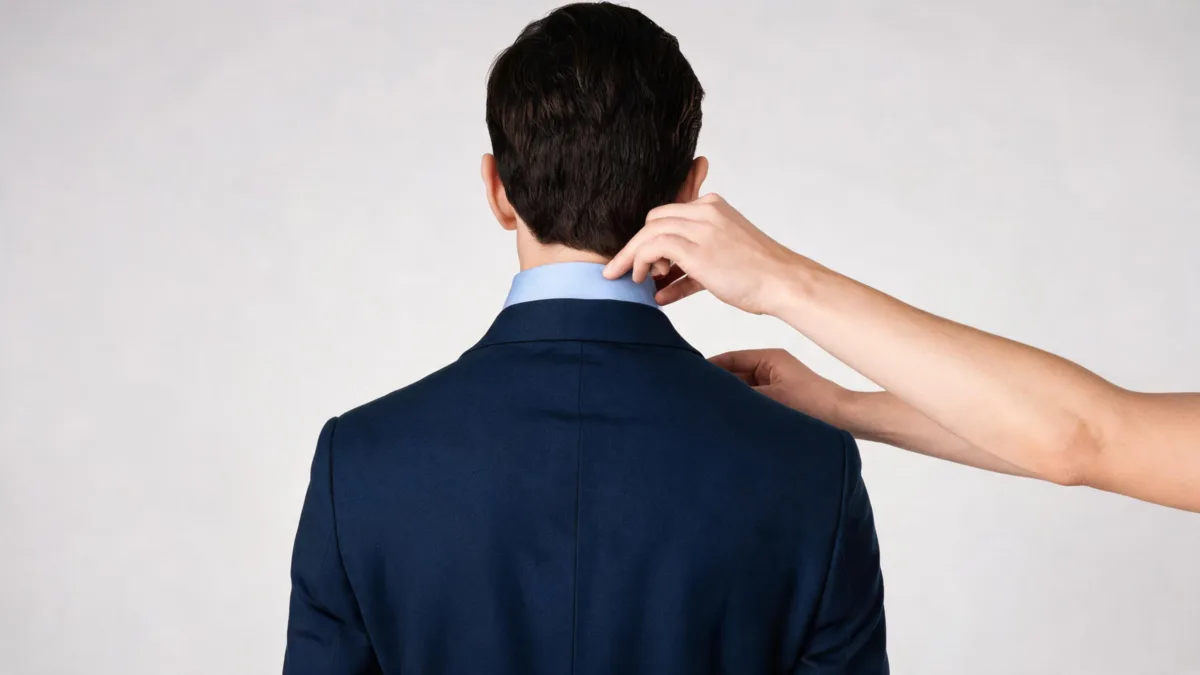
A final collar and shoulder check matters more than adding another accessory that will barely appear in the crop.
Use this checklist once the outfit is on:
- Shoulders: The jacket or shirt should sit at the natural shoulder rather than hanging over it or pulling toward the neck.
- Collar and neckline: Check that the collar lies flat and frames the face without covering the jaw or fighting the jacket lapel.
- Fabric and pattern: Prefer a clear, non-shiny surface. Very small checks, stripes, and herringbone can behave unpredictably in a compressed online image.
- Color and background: Check the combination against the actual wall or backdrop. The aim is separation, not a color rule that works in every room.
- Condition: Press the shirt, remove lint, and check buttons, cuffs, and visible seams. A strong outfit direction can still look careless if the garment is creased.
- Comfort: Sit, turn, and breathe in the outfit. Discomfort changes posture and expression, which a clothes preview cannot solve.
This is practical preparation, not a universal dress code. Connor Hibbs's current men's headshot guide similarly emphasizes fit and matching the look to the role, but your photographer, employer, and industry may reasonably ask for something different.
Use an AI preview for the narrow question it can answer
An AI preview works best when you are undecided between specific visual directions—not when you are asking it to invent your professional identity. Use one sharp, recent portrait with a visible chest and shoulders. Keep the face, hairstyle, body, pose, light, and background fixed across the options.
For example, compare these two requests on the same source image:
- “Add a well-fitted navy blazer over a plain pale-blue collared shirt. Preserve the face, hair, pose, hands, lighting, and background.”
- “Keep the same person and scene. Use a plain charcoal crew-neck knit with no logos or visible text.”
Then ask a practical question: which option better matches the page where the photograph will live? Do not use the output to claim that a jacket is tailored, that a shirt is available, or that the result represents a real session. For the image-making workflow itself, see put a suit on a photo. For a broader visual-quality check, see how accurate AI clothes changers are.
Bring a real backup, not a dozen possibilities
Too many options can make a short headshot session harder. Bring the chosen look plus one backup that answers a different need: jacket on versus jacket off, a darker neutral versus a lighter neutral, or an open collar versus a tie. Keep both clean, pressed, and ready to hang.
Ask the photographer about its background, crop, and intended use before shoot day. A background that makes a navy jacket look excellent may make a charcoal knit disappear. If the company supplies a background or has team-photo requirements, follow those over generic online advice.
This article was reviewed on September 1, 2026 against current photographer preparation guidance found for men's professional headshots. It is an editorial planning checklist, not a promise about career outcomes, body fit, or a particular employer's dress expectations. Use only portraits you have permission to edit, and keep a generated outfit preview separate from a final professional photograph when that distinction matters.
Frequently asked questions
What should men wear for a professional headshot?
Wear an outfit that matches the level of formality your audience expects and keeps attention on your face. A well-fitting, clean, solid shirt with an optional jacket is often easier to photograph than a busy pattern, large logo, or poorly fitting layer.
Should I wear a suit for a men's headshot?
Wear a suit when it matches the role, industry, and context where the image will appear. A blazer and open collar, knit, or simple shirt may be a better match for a less formal workplace. The useful test is whether the outfit looks like you on a credible work day.
Can an AI clothes changer replace a real headshot session?
It can help you compare outfit directions on a stable photo, but it cannot guarantee tailoring, fit, fabric behavior, a photographer's lighting, or a company's image requirements. Use it as a planning aid, then review the real clothes and final photograph.
Related guides
- Try the free AI clothes changer →
- Put a suit on a photo
- Business attire photo preview
- AI clothes changer for men
- Best photo for an AI clothes changer
Let the photo stay about you
Use an AI clothes changer to compare two credible directions, then choose the real outfit that fits the job, the crop, and your actual working life.