PixNova AI Clothes Changer: What to Check First
Review PixNova AI Clothes Changer with a practical input, output, privacy, and purchase checklist before you rely on an outfit preview.

PixNova AI Clothes Changer is worth considering only after you check what its current tool actually asks for, what its output changes, and whether that result can support your decision. Its public pages describe an online clothes-changing workflow inside a broader AI image and video platform. Start with one clear, permitted photo; test one modest outfit direction; then inspect the result against the original. If you want a focused garment-reference workflow, you can also compare the same decision in an AI clothes changer.
Last updated: September 4, 2026 · about 7 min read
What PixNova publicly presents today
PixNova's main platform page lists an AI Clothes Changer among a large set of image and video tools. Its separate clothes changer page frames the feature as an online outfit-preview and clothing-variation tool. Those descriptions are a useful starting point, but they are the vendor's own claims—not a guarantee that every photo, prompt, credit allowance, or output will behave the same way.
That distinction matters because an outfit preview answers a narrow visual question well: Do I prefer this color, layer, or formality on this photo? It cannot establish a real garment's measurements, availability, fabric feel, or fit. Treat the output as a draft for a decision, not proof of a product fact.
| Check before you start | Why it matters | A good outcome |
|---|---|---|
| The live tool screen | Plans, limits, account steps, and supported inputs can change | You know the current upload and export conditions |
| Your source image | Hair, hands, and heavy shadows make an outfit boundary ambiguous | One adult subject with the clothing area clearly visible |
| Your one requested change | A broad request makes failures hard to diagnose | One garment, color family, or level of formality |
| Your intended use | A private style test has a lower bar than a customer-facing claim | You know whether a real photo or product record is still needed |
Make one controlled test
- Use a photo you may edit. Pick a well-lit image with one person, visible shoulders and torso, and no one else's likeness or private information in the frame. Keep an untouched copy.
- Request one clothing direction. A narrow direction such as “a structured navy overshirt” is easier to review than a request that changes clothing, body, hair, lighting, and background together. If you are working from a real item, preserve its listing and size information outside the image tool.
- Review against the original. View both images at full size. Check whether the face, pose, hands, hair, scene, and lighting stayed stable enough for a fair clothing comparison.
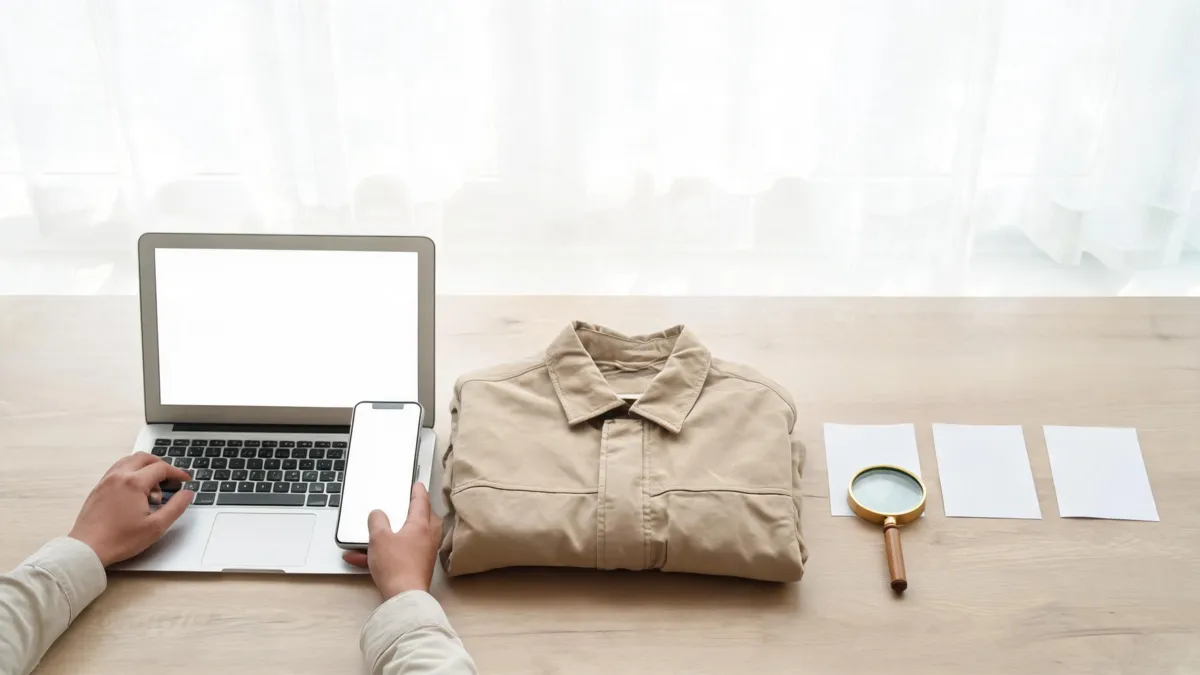
A review should compare the generated variation with the original and the real garment information—not just judge whether the new image looks polished.
If a version changes the person or scene enough to make the outfit look better, it is a new concept image. Start again from the original with a smaller request.
Check the output where edits usually fail
The first glance tells you whether the outfit direction is appealing. The close inspection tells you whether the comparison is useful.
- Face and body: A clothes-only edit should not quietly change identity, expression, apparent proportions, or age.
- Boundaries: Look closely at collars, shoulders, cuffs, hems, hands, hair, jewelry, bags, and the background around the body.
- Light and material: Check whether folds, shadows, texture, and highlights belong to the same room and camera angle.
- Real-world claims: Do not infer that a generated color is in stock, a print is accurate, or a garment will fit. Verify those points with the seller, garment, or approved product record.
For a more repeatable review, use the AI clothes changer review checklist. It separates a visually plausible draft from one that is appropriate to save, share, or use in a commercial workflow.
Decide whether PixNova is the right kind of tool
PixNova may make sense when you want an all-in-one creative platform and a quick outfit variation is one part of the job. Its public site groups the clothes changer with many other image and video features, so it is sensible to test the exact workflow you need rather than assume that a platform-wide claim applies to the clothes result.
Choose a dedicated clothes workflow when your goal is narrow: a person photo plus a garment reference, a few controlled comparisons, and careful review of only the clothing change. AIClothSwap is built for that focused workflow; see the virtual try-on page when you are comparing a specific garment on a person photo.
Choose real photography, a fitting room, or the seller's information when the decision depends on fit, measurements, fabric transparency, construction, a technical feature, or inventory. No photo edit can supply those facts reliably.
Privacy and sharing deserve a separate check
Before upload, read the current PixNova privacy policy and terms, especially if the image contains a face, a home, a workplace, or a product not yet public. Product policies and retention details can change, so the live documents—not a review article—are the authority.
Use only photos and garment references you are authorized to use. Keep an original file, name generated variants clearly, and do not share a render in a way that suggests a documented event or real product fact it does not show. Sellers should compare every customer-facing image with the actual SKU and approved copy; our AI fashion model image checklist covers that higher bar.
Frequently asked questions
Is PixNova AI Clothes Changer free to use?
PixNova presents its clothes changer as a free-trial tool, but free allowances, credits, account requirements, and export terms can change. Check the live screen and terms before uploading a photo or relying on a particular allowance.
Can PixNova AI Clothes Changer show whether an item will fit?
No. A generated preview can help compare a color, silhouette, or styling direction, but it cannot measure a body, verify a seller's size chart, or predict fabric stretch and comfort.
What should I check in an AI clothes changer result?
Compare it with the original at full size. Check the face, hands, collar, sleeves, hair overlap, shadows, garment edges, and any implied product claim before saving or sharing it.
Related guides
- Try the free AI clothes changer →
- AI clothes changer review checklist
- AI virtual try-on vs. clothes changer
- Best photo for an AI clothes changer
Make the preview answer one real question
Test one clothing decision, preserve the original, and verify the real-world details somewhere other than the render. Start a controlled outfit comparison →.