
Vampire Costume Ideas for Adults to Preview on Yourself
Compare seven vampire costume ideas for adults, from a classic cape to a modern suit. Choose wearable pieces and preview the silhouette on your photo.
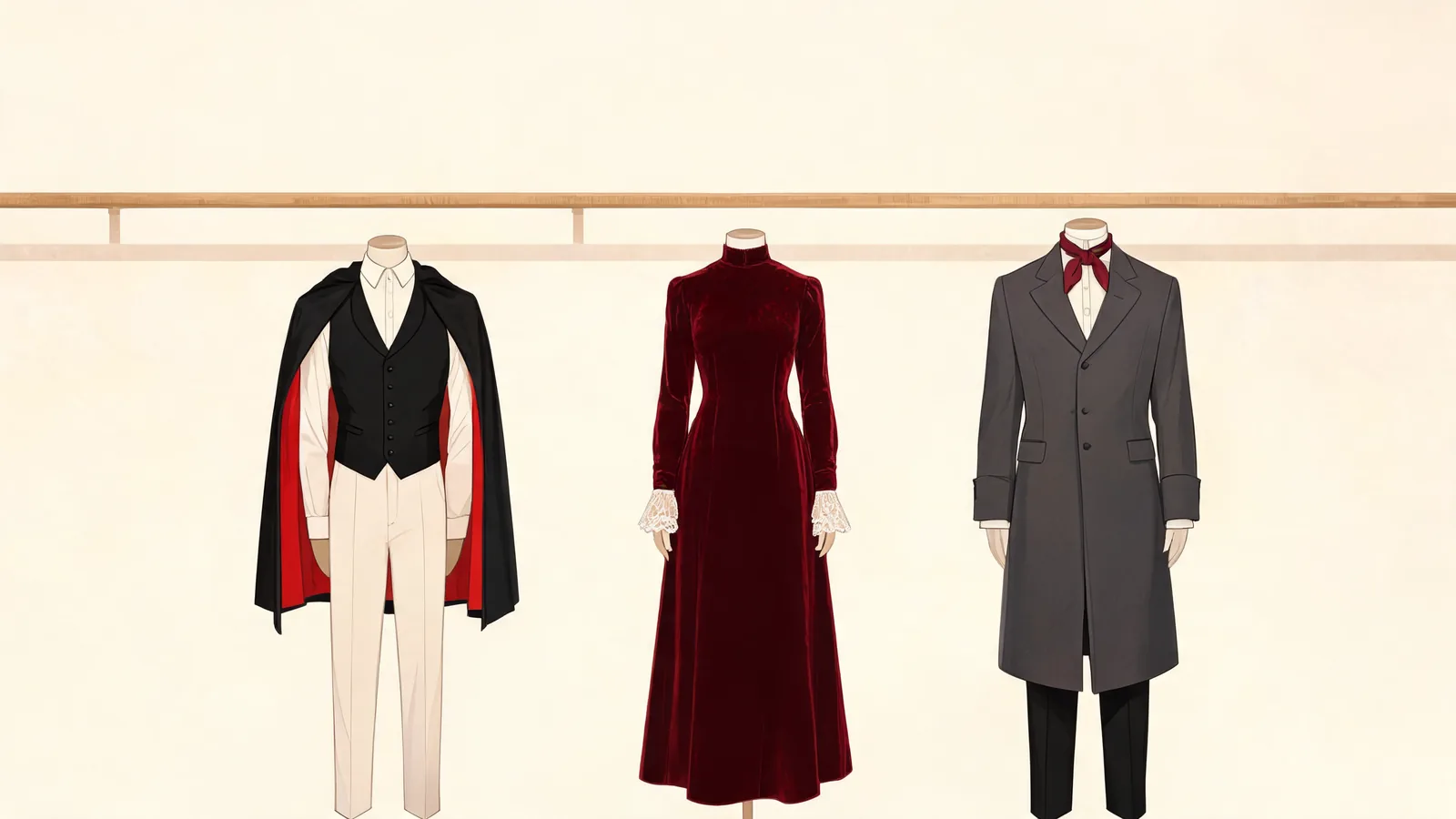
The most useful vampire costume ideas start with a garment you already like wearing: a cape over a waistcoat, a velvet gown, a frock coat, a goth suit, a city overcoat, simple black separates, or a coordinated pair. Use Vampire Filter to compare a direction on your photo, then assemble the real pieces.
Last updated: October 13, 2026 · about 9 min read
Choose the shape before the accessories. A cape makes the shoulders the focal point; a gown creates one continuous line; tailoring puts attention on the neckline and waist. For a seated dinner, start with the suit or simple separates. For an outdoor arrival, consider a coat. Save the largest cape or skirt for a setting where you have room to move.
These are original adult outfit suggestions. The cover illustrates three wardrobe directions; it is not a photograph of tested edits or purchasable sets. AIClothSwap publishes this guide and provides the photo-preview studio described below.
Which vampire look suits your evening?
Use the table to narrow the choice to two outfits. “Already own” means a possible starting piece, not a reason to assume a costume needs no adjustments.
| Direction | Main pieces | Possible piece already owned | Practical question |
|---|---|---|---|
| Classic cape | Open cape, waistcoat, shirt, trousers | Plain white or ivory shirt | Can you sit without trapping the cape? |
| Victorian gown | Opaque velvet dress, lace cuffs, boots | Long dark dress | Does the hem stay clear of the floor? |
| Victorian frock coat | Long tailored coat, waistcoat, cravat | Formal trousers | Are the layers comfortable together? |
| Modern goth suit | Dark jacket and trousers, red shirt | Black blazer | Will the room be too warm for the jacket? |
| City vampire | Long coat, fine-knit top, straight trousers | Dark overcoat | Is the coat workable indoors? |
| Simple separates | Black top and bottom, burgundy accent | Most of the base outfit | Which detail makes it feel intentional? |
| Coordinated couple | Two distinct outfits sharing color or texture | One formal piece each | Do both people prefer the same level of drama? |
You can keep the same palette across all seven: charcoal or black, an ivory contrast if wanted, and one deep red element. Try the contrast near the face before committing to it. The goal is a readable outfit, not the greatest number of costume accessories.
1. Classic cape and waistcoat
Wear a plain ivory shirt, a black or charcoal waistcoat, straight black trousers, and shoes you can comfortably walk in. Add a black cape with burgundy lining. Keep the cape open so the shirt and waistcoat remain visible; otherwise the entire outfit can become one dark triangle.
The collar is the decision point. A tall stiff collar creates a stronger theatrical shape, while a lower soft collar leaves more room around the face. Neither needs a mask or an elaborate prop. Check how the fastening sits at the neck and whether it pulls when you turn your head.
For a photo comparison, ask to see the open cape over the waistcoat rather than a closed cloak. In real life, practice taking it off and putting it back on. A cape you can remove easily is more practical for dinner or a crowded room than one that needs constant repositioning.
2. Victorian-inspired velvet gown
Start with an opaque, long-sleeved burgundy or black dress with a high neckline. Add plain boots and a small amount of lace at the cuffs or collar. A velvet texture gives the outfit its central detail, so you do not need a second elaborate outer layer.
This is period-inspired styling, not a historical reconstruction. A modern dress can work if the neckline, sleeve shape, and length feel consistent. If you already have a long black dress, a separate velvet jacket or collar detail may provide enough contrast without replacing the whole garment.
Try a simple hem first. A train or several overskirts can look striking in a picture but complicate movement. When comparing photos, look for a clear waist and skirt outline. When comparing actual dresses, walk, sit, and check whether the fabric catches around your footwear.
3. Victorian frock coat and cravat
Build this outfit around a dark, knee-length tailored coat. Add a charcoal waistcoat, pale shirt, plain trousers, and a burgundy cravat or neck scarf. The longer coat creates the period mood; the rest can stay restrained.
Use one decorative feature, such as a textured waistcoat or a patterned neckcloth. Combining embroidered lapels, ornate buttons, gloves, and several necklaces makes it harder to tell which item is improving the outfit. A plain cuff also lets you use your phone or carry a drink more easily.
Before adding another layer, wear the shirt and waistcoat together for a few minutes. If they already feel warm or restrictive, choose a lighter coat. For the portrait, keep the coat open enough to see the waistcoat rather than hiding the outfit you assembled underneath.
4. Modern goth suit
Choose a black tailored jacket with matching or compatible trousers and a deep red shirt. Keep footwear simple. A narrow scarf can replace a tie, but you can leave the neckline clean if the shirt is already a strong contrast.
This option works well when you want the costume to use clothes that can be worn again. The vampire direction comes from the deliberate dark tailoring and red accent rather than a recognizable film character. Do not request a celebrity's face or recreate a franchise costume.
Check the jacket and trouser shapes together. A fitted jacket with very loose trousers may be exactly what you want, but make it a conscious choice. The AI outfit generator page explains description-based styling more generally; here, keep the focus on a small number of vampire wardrobe elements.
5. Long-coat city vampire
For a quieter contemporary look, use a charcoal overcoat over a black fine-knit top and straight trousers. Add a burgundy scarf or a red shirt layer, plus plain boots. Compared with the suit, this direction emphasizes the vertical coat line and uses less formal detailing.
Choose a coat that still looks good unbuttoned. If it becomes bulky over the layers underneath, remove the waistcoat or use a thinner top. A coat you already own can be the strongest starting point, especially for an evening with travel or outdoor waiting.
The practical tradeoff is what happens indoors. Plan a version that still feels complete when the coat is off. A single red accent under the coat can carry the theme, so the costume does not disappear when you check your outerwear at the door.
6. Simple black separates with one red accent
Use a black blouse or shirt with black trousers or a skirt, then select one burgundy detail: a neck scarf, waistcoat, belt, or cardigan. A structured shoulder or defined waist gives ordinary clothes an intentional silhouette.
This is the easiest direction to assemble from a wardrobe, but avoid assuming every black item will match. A faded cotton top and glossy trousers can work as a deliberate contrast; several slightly different shades and unrelated textures may look accidental. Lay the pieces together in the same light before deciding.
Spend your attention on proportion. Tuck or untuck the top, try the red accent near the face versus at the waist, and compare the two. You may find that one adjusted base garment does more for the look than a bag full of novelty accessories.
7. A coordinated vampire couple
Two adults can share a palette without wearing the same costume. Pair a burgundy gown with a charcoal frock coat, or an open cape with a modern black suit. Repeat one detail, such as velvet or an ivory shirt accent, so the outfits read as a pair.
Agree on formality first. One person in an elaborate period gown and another in casual separates can still coordinate, but you need a connecting color or texture. Let each person keep the silhouette they enjoy wearing rather than forcing a matching set.
The couples Halloween costumes page explains pair-specific styling. For a two-person edit on Vampire Filter, use Studio Quality and identify each adult by position, with separate clothing descriptions. Both people must agree to the upload and edit. Keep those mode instructions specific to the page you are using.
Compare your shortlist in a still photo
As of October 13, 2026, Vampire Filter accepts an adult photo and has an editable description already filled with an original high-collared cape, red lining, velvet, and a candle-lit gothic hall, without blood. Its own demonstrations show classic, modern, and Victorian directions. They are visual references, not guarantees for another photograph.
The studio changes clothing rather than swapping faces and aims to keep the subject recognizable. It produces still photos. Start with a clear picture showing the outfit area and inspect facial details in the result; an unwanted change is a reason to reject the image.
On this page, Free Preview uses one outfit photograph on one person at no cost. Essential Try-On also uses one outfit photograph. Studio Quality follows the written description, supports up to six outfit reference images, and enables dressing two adults in one photograph. It unlocks after any membership or credit-pack purchase. You can supply costume images instead of describing the outfit.
A useful comparison is “waistcoat with an open cape” versus “the same shirt under a long coat.” Keep the source photograph consistent so the garment choice is easier to judge. The AI vampire photo tutorial walks through the controls and checks if you need procedural help.
What to check before buying or wearing anything
A preview can suggest which silhouette you like; it cannot confirm the garment's size, exact construction, or comfort. Read the seller's measurements and fabric information, compare them with the actual clothes you own, and inspect reference photographs for details the edit may have interpreted differently.
For the physical costume, pay attention to hems, sleeve volume, and the collar fastening. The U.S. Consumer Product Safety Commission's Halloween guidance advises against costumes that drag and warns about large capes or billowing clothing near fire sources. Choose a practical length and keep fabric away from open flames.
Keep these checks separate: the image tells you whether you like the visual direction; trying on the clothes tells you whether you can move in them. Neither an attractive portrait nor a seller's styled photograph answers both questions.
Frequently asked questions
What is a simple vampire costume made from ordinary clothes?
Combine a black shirt or blouse, black trousers or a skirt, and one burgundy accent. A structured jacket or waistcoat adds definition. Keep the shapes deliberate and avoid buying several accessories before trying the clothes together.
Can a vampire costume work without a cape?
Yes. A tailored dark suit, a long coat, or a high-neck velvet dress can provide the main silhouette. Add a restrained red accent and choose one contrasting texture so the outfit does not look like unrelated black pieces.
How do two adults coordinate different vampire outfits?
Repeat a color and fabric rather than matching every garment. For example, pair a charcoal frock coat with a burgundy gown and give both outfits a velvet detail. Agree on the same level of formality and check both outfits together.
Does a costume preview show whether the clothes will fit?
No. A still-photo preview helps compare colors and silhouettes. It cannot confirm size, movement, comfort, exact fabric, or product availability. Use the actual garment measurements and try the physical outfit before wearing it out.
Related guides
Pick the two outfits that suit your plans, then preview your vampire wardrobe direction. Save the clothing details you like and check the real garments before the event.