
Couple Costume Ideas for Halloween 2026 to Try On First
Compare nine original couple costume ideas, from vampires to moon-and-star outfits. Choose each partner's garments and preview your shortlist together.
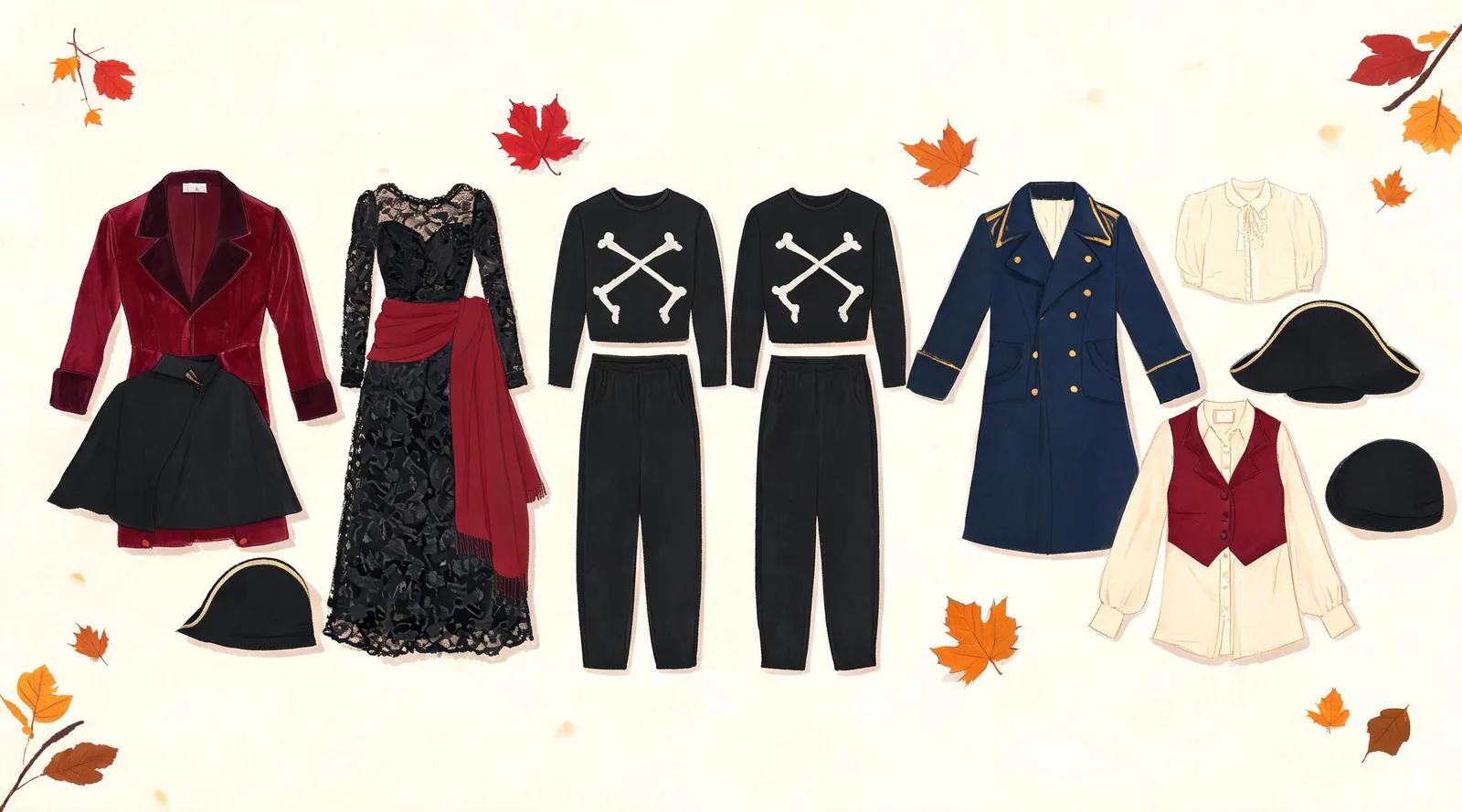
Good couple costume ideas share one clear theme while giving each person clothes they want to wear. Start with vampires for a dressed-up look, skeletons for simple matching outfits, or pirates for different silhouettes. The Couples Halloween Costumes page lets you preview the pair on one photo before committing.
Last updated: October 12, 2026 · about 8 min read
These nine couple costume ideas for Halloween 2026 use original garments and broad themes rather than franchise characters or celebrity likenesses. Each includes what both partners wear, what connects the outfits, and the practical detail that could make you choose something else. Swap any garment or role to suit the adults wearing it.
The cover is an illustrated costume board, not a shopping catalog or a demonstrated tool result. The garment combinations are styling suggestions; they do not claim that specific items are in stock or that a preview verifies fit.
Which couple costume idea should you shortlist?
Pick the mood first, then check what you already own. Two black outfits can become skeletons; a jacket and long dress can become a vampire pair; cream shirts and dark trousers can become pirates. A costume is easier to finish when its main pieces are already comfortable.
| Pair | First partner's clothes | Second partner's clothes | Shared detail | Likely preparation |
|---|---|---|---|---|
| Vampires | Velvet-style coat, dark trousers, short cape | High-neck dress, velvet shawl | Burgundy accent | Moderate: source coordinated layers |
| Skeletons | Black top and trousers with white bone print | Matching printed top and trousers | Same print style | Low if buying printed garments |
| Pirates | Captain coat, cream shirt, boots | Waistcoat, cream blouse, dark trousers | Navy or burgundy | Moderate: assemble several pieces |
| Ghost bride and groom | Ivory long dress, short veil | Pale jacket, waistcoat, trousers | Soft ivory and grey | Higher: find a coherent pale palette |
| Witch and warlock | Dark dress, cropped cape, pointed hat | Long coat, plain shirt, trousers | Plum or forest-green trim | Moderate: coordinate outer layers |
| Moon and stars | Navy outfit with silver moon appliqués | Navy outfit with silver star appliqués | Silver on deep blue | Moderate: attach secure decorations |
| Autumn forest spirits | Rust tunic or dress, brown boots | Moss-green jacket, brown trousers | Leaf-shaped fabric accents | Moderate: make simple details |
| Haunted ballroom guests | Long black skirt, high-neck blouse | Dark suit, antique-style waistcoat | A muted silver accessory | Low to moderate if reusing formalwear |
| Fortune teller and night magician | Layered skirt, plain blouse, scarf | Dark coat, waistcoat, trousers | Purple scarf or sash | Moderate: style separates |
“Preparation” here describes the number and complexity of pieces, not a measured time or promised cost. Sewing a bone pattern yourself takes more work than buying a printed top. Start from your own wardrobe rather than treating every pairing as a shopping list.
1. Vampires: coordinated, without identical outfits
One partner wears a black velvet-style frock coat, dark trousers, and a short crimson-lined cape. The other wears a high-neck black dress with a burgundy shawl. Repeat burgundy at the neckline or shoulders so the connection survives even when you take the cape off.
This suits a party where you want something dressed up. Neither outfit needs blood effects or an altered face to communicate the idea. Keep necklines, sleeves, and hems comfortable; a costume that needs constant adjustment is a poor choice for a long evening.
For a less formal version, give both people black separates and different velvet outer layers. The AI Vampire page offers cape-and-velvet examples, while the couple page includes its own matching vampire demonstration. Treat those as theme references, not evidence that a particular coat fits you.
2. Skeletons: the simplest matching pair
Give both partners black long-sleeved tops and trousers with white bone motifs. Compare the two prints before buying: similar line thickness and placement make a pair feel coordinated, while a realistic print beside a cartoon pattern can look accidental.
This is a useful starting point if both people want soft separates and minimal accessories. You can skip skull makeup entirely and keep faces recognizable. Decide whether you want the print on the top only or throughout the outfit before buying pieces.
The AI Skeleton page shows bone-print costume directions. For the physical clothes, check that printed panels sit where you want them when you bend or sit; an attractive flat photograph does not tell you how a stretch garment behaves.
3. Pirates: different garments, one palette
Put one partner in a navy captain coat over a cream shirt and dark trousers. Give the other a burgundy waistcoat over a cream blouse, with dark trousers or a long skirt. Cream links the pair; navy and burgundy add enough difference to make each outfit feel personal.
Choose one or two accessories per person. A hat and scarf are often enough to communicate the theme without filling the photo with props. Keep this an original seafaring costume rather than copying a recognizable movie character.
Pirates are a good compromise when one person prefers a coat and the other likes lighter layers. Check the hat indoors, the boot comfort, and whether a sash stays secured. If either person dislikes hats, repeat the coat trim or scarf color instead.
4. Ghost bride and groom: a pale, dramatic pair
One partner wears an ivory long-sleeved dress with a short veil or pale shawl. The other wears a light-grey or ivory jacket, waistcoat, and trousers. Connect them with faded ribbon details and a restrained palette rather than distressed skin or gore.
The challenge is finding pale pieces that look intentional together. An ivory dress beside a bright-white jacket may produce a contrast you do not want. Compare the actual garments in daylight before choosing this pairing.
Keep any veil away from the face and any hem clear of the ground. This is a visual ghost theme built through clothing, not a reason to obscure either person's identity. A shorter dress and pale trouser suit can carry the same idea if you prefer practical movement.
5. Witch and warlock: one accent, two shapes
One partner wears a dark high-neck dress, cropped cape, and simple pointed hat. The other wears a long dark coat, plain shirt, and trousers. Repeat plum or forest-green edging on both outer layers so the pair reads as a set.
This option gives you room to use familiar clothes. A black dress and black coat need only a few coordinated details. Keep the designs original, with no school crest, famous character silhouette, or branded prop.
Decide whether hats are worth the inconvenience. For a crowded indoor party, scarves or lapel trim can supply the shared detail instead. If you will be outdoors, choose real outer layers that work for the weather rather than relying on how warm a preview makes them look.
6. Moon and stars: matched colors, different motifs
Dress both partners in deep blue. Give one a silver crescent appliqué on a tunic or jacket and the other small silver stars on a long-sleeved top or dress. The palette ties them together while the motifs distinguish the two roles.
This is a gentle alternative to horror-themed outfits. It also works with trousers on both people, so you do not have to buy a dress to make the pair recognizable.
Use decorations that remain secure as you move. Before attaching them permanently, lay the proposed shapes on your clothing and view the arrangement from across the room. Large, simple motifs usually communicate the idea more clearly than many tiny pieces crowded around a neckline.
7. Autumn forest spirits: coordinated through texture
One partner wears a rust-colored tunic or modest dress with brown boots. The other wears a moss-green jacket, neutral shirt, and brown trousers. Add leaf-shaped fabric details at a shoulder or cuff, using the same material on both outfits.
This pairing is useful if you prefer autumn colors to black. The two people do not need identical garments; repeated brown footwear and leaf details create the connection.
Avoid making the design dependent on a large headdress or loose branches. Small fabric leaves are easier to carry through a whole evening. The main buying decision is whether the base layers work together without the decorations: if they do, you can reuse them afterward.
8. Haunted ballroom guests: reuse formal clothes
Build one outfit from a long black skirt and high-neck blouse, and the other from a dark suit and antique-style waistcoat. Connect them with muted silver brooches, matching ribbon, or a similar fabric finish.
The clothing tells a quiet haunted-house story without requiring face paint. It works best when the two outfits look as though they belong at the same kind of event. A heavily ornate skirt next to a very casual jacket may need a simpler blouse or a more structured second layer.
Before buying anything, try the real base outfits together. A scarf or waistcoat may be the only missing piece. Keep invented historical styling broad rather than presenting it as an accurate reconstruction of a particular era.
9. Fortune teller and night magician: two roles from separates
One partner wears a layered skirt, plain long-sleeved blouse, and purple scarf. The other wears dark trousers, a waistcoat, and a long coat with a purple pocket detail or sash. The repeated purple does the coordinating work.
These are fictional stage roles, not representations of a real culture or a named performer. Avoid ethnic stereotypes and branded magic-show props. Both people can wear trousers if that is more comfortable.
The main practical question is how the layers feel together. A scarf may be warm indoors, and a long coat can be awkward when seated. Choose pieces you can remove while keeping enough of the shared color for the pair to remain recognizable.
How do you choose when you like different costumes?
Agree on a common palette before you agree on matching shapes. One person can wear a cape while the other wears a shawl; one can have a bone-print top while the other has a printed jacket. Matching does not require equal effort or identical clothing.
Shortlist two options using three questions: Do we already own the main pieces? Can both of us move and sit comfortably? Does the connection remain clear without a prop? If an idea only works while you hold a large accessory, decide whether you want to carry it all night.
For real garments, Health Canada's Halloween safety advice highlights fit, visibility, and the risks of long or loose costumes. Use those physical checks when building your pair; a pleasing image cannot do them for you.
How can you preview the shortlist together?
Use one clear photograph of both consenting adults, side by side with visible faces. Waist-up is useful for upper layers; full-body is better for the overall silhouettes. On the couples page, the editable description starts with a matching vampire pair.
- Assign the clothes. Name the person on the left and the person on the right, then give each a garment list and the shared accent.
- Choose the description option. As of October 12, 2026, Essential Try-On supports both adults from text on this page. Studio Quality also follows descriptions, supports up to six garment references, and opens after a membership or credit-pack purchase. Essential accepts one outfit reference; Free Preview uses one outfit photo on one person at no cost.
- Compare the idea, then the real items. The output is a still photo. Inspect both faces, hands, and outfit assignments before judging the colors. Check actual sizing, material, included pieces, and return conditions separately.
A photo containing only one person dresses only that person. The tool aims to keep faces recognizable and changes clothing rather than swapping identities. For the full photo-preparation and correction workflow, read how to try on couples Halloween costumes.
AIClothSwap publishes this guide and provides the linked preview tools. The ideas are editorial suggestions, not a claim that every combination has been personally tested or that generated clothing will match a retailer's stock exactly.
Frequently asked questions
What is an easy couple costume using clothes we already own?
Start with black separates for skeletons, cream shirts and dark trousers for pirates, or formal black clothes for haunted ballroom guests. Choose one repeated print or accent, then add only the pieces needed to make the theme clear.
Do both partners have to wear the same costume?
No. A shared color, fabric, or motif can connect different garments. A cape and shawl can make a vampire pair, while a captain coat and waistcoat can make a pirate pair. Let each adult choose clothes they are comfortable wearing.
Which pair works without makeup or masks?
Skeletons, moon-and-star outfits, autumn forest spirits, and haunted ballroom guests can communicate their theme through clothing. Vampire and witch outfits can also work without face paint. Keeping faces visible makes it easier to compare recognizable identities in a preview.
Can we preview our own idea instead of the vampire example?
Yes. Replace the prefilled description with original garments for each adult, using left and right to assign them. Keep the designs free of franchise characters, celebrity likenesses, gore, and sexualized styling. Review the still image before using it as a shopping reference.
Related guides
Choose two pairs you would both enjoy wearing, then open Couples Halloween Costumes to compare the shortlist on a photo you both agree to use.