
What to Wear to Court: A Calm, Respectful Outfit Checklist
What to wear to court: choose clean, conservative business or business-casual clothing, then check the court's own rules. Use this calm, practical checklist before you leave.
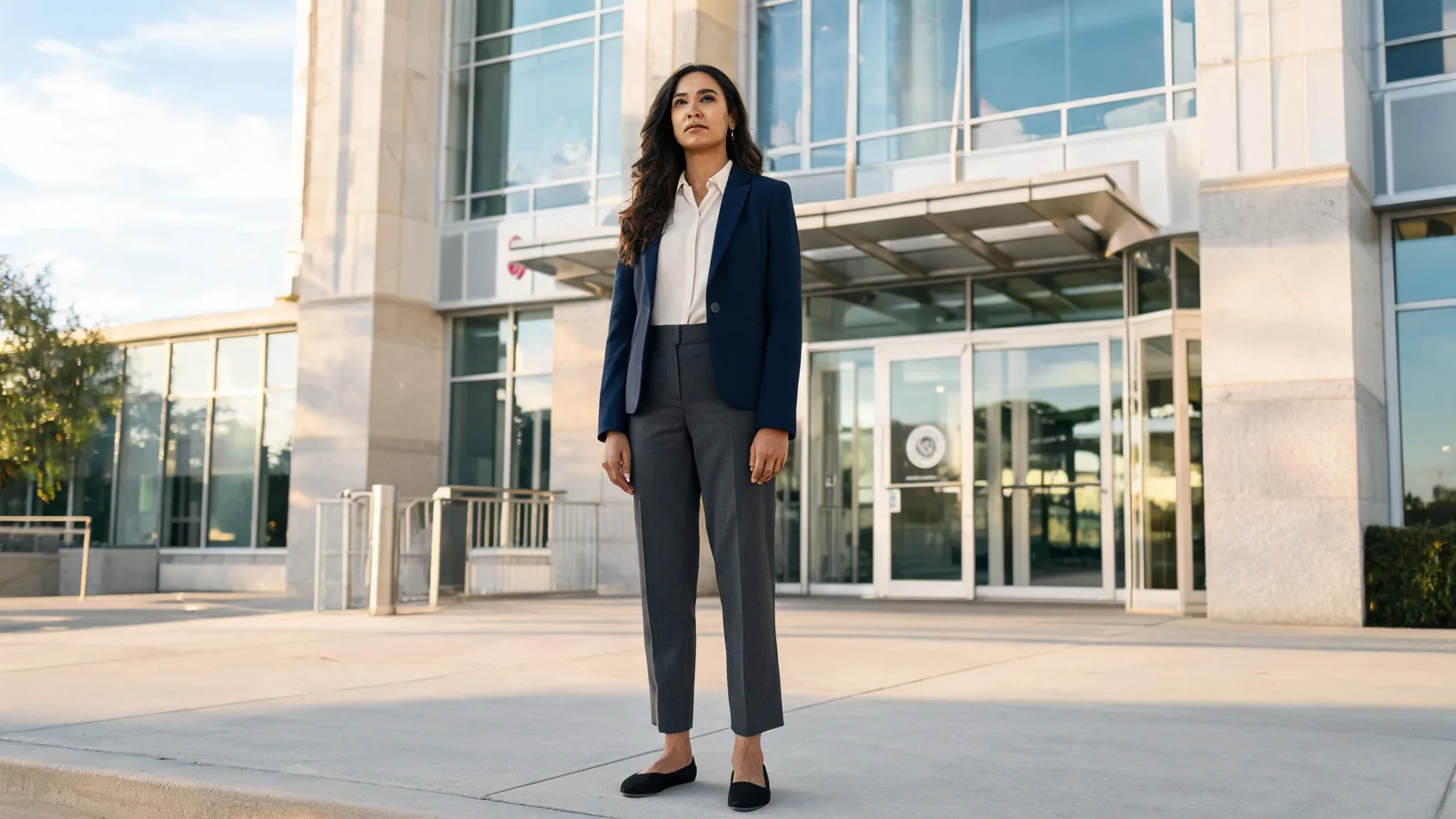
For a court appearance, wear the cleanest, most conservative business or business-casual outfit you can assemble: a collared shirt or simple blouse, pressed trousers or a modest dress or skirt, and comfortable closed-toe shoes. The point is not to look expensive; it is to look prepared and unobtrusive. Check the notice from your court and follow your lawyer’s advice if you have it.
Last updated: October 1, 2026 · about 7 min read
Court dress rules vary by jurisdiction and by the reason you are there. A traffic hearing, family-court matter, witness appearance, and formal trial may call for different levels of formality. Your notice, the court website, and your attorney take priority over a general guide. If no specific rule is given, aim for the kind of neat, quiet outfit you would wear to a serious job interview.
Start with a simple court-appropriate outfit
You do not need a new wardrobe or an expensive suit to look respectful. Start with pieces that are clean, fit well enough to sit and move in, and do not pull attention away from the proceeding.
| If you have it | A practical alternative | Leave at home when possible |
|---|---|---|
| Suit, pantsuit, or tailored blazer | Cardigan or simple jacket over a collared shirt or blouse | Clothing with loud slogans, graphics, or political messages |
| Pressed dress trousers or a conservative skirt | Clean chinos or other neat trousers | Ripped denim, athletic wear, shorts, or pajama-style clothing |
| Button-down shirt, plain blouse, or modest dress | Plain sweater layered over a collared shirt | Very low, sheer, or otherwise distracting clothing |
| Loafers, flats, or other closed-toe shoes | Clean, understated closed shoes you can stand in | Flip-flops, beach slides, or visibly dirty shoes |
Muted colors such as navy, gray, cream, charcoal, or soft blue are easy choices because they do not demand attention. A small pattern is usually fine if it reads as ordinary rather than theatrical. The same principle applies to accessories: keep jewelry, fragrance, bags, and makeup simple enough that you can stop thinking about them once you sit down.
If you have to choose between a sharp-looking outfit that makes you fidget and a clean, comfortable outfit that lets you focus, choose the comfortable one. A calm fit matters on a day that can involve security, waiting, and long stretches of sitting.
Build your outfit in three steps
- Read the court's instructions. Look at the notice, the court website, and any message from your lawyer. Some courts list prohibited clothing or ask people to remove hats; others give only a broad request to dress respectfully.
- Choose one quiet base outfit. Pair a collared shirt or blouse with pressed trousers, a conservative skirt, or a modest dress. Add a blazer, cardigan, or simple sweater only if it helps with formality or the temperature.
- Do a practical check the night before. Sit down, walk a few steps, and make sure the outfit is clean, comfortable, and suitable for security screening. Set out closed-toe shoes and a light layer so you do not have to improvise in the morning.
If you are unsure how a combination reads on you, use an AI clothes changer to explore a conservative outfit idea before you shop or get dressed. Treat the result as a planning sketch, not proof of fit, fabric, court compliance, or what you should wear in your particular case.
Make the choice fit your role and the day
The safest overall target is modest business or business-casual clothing, but your role changes what is most useful to prioritize.
If you are a party or witness
Choose an outfit that is conservative, clean, and comfortable enough to keep your attention on the questions being asked. Avoid turning clothing into a message. If you have a lawyer, ask whether the nature of your case or local practice suggests a particular level of formality. This article is about presentation, not legal strategy.
If you are attending to support someone
You can usually keep the same quiet business-casual baseline. Bring only what the court allows, arrive with time for security, and choose layers that can handle a cool courtroom. The aim is to be present without becoming a distraction.
If you are going to a short hearing
Do not assume a short appearance means casual clothing is appropriate. A simple button-down or blouse with tidy trousers and closed shoes is often enough. If a full suit feels out of reach or out of place, clean and understated is a better goal than trying to look overly formal in an uncomfortable outfit.
For a longer day, a breathable shirt, a belt that does not pinch while seated, and shoes you have already worn in can make a meaningful difference. Carry a plain layer rather than relying on a bulky coat indoors.
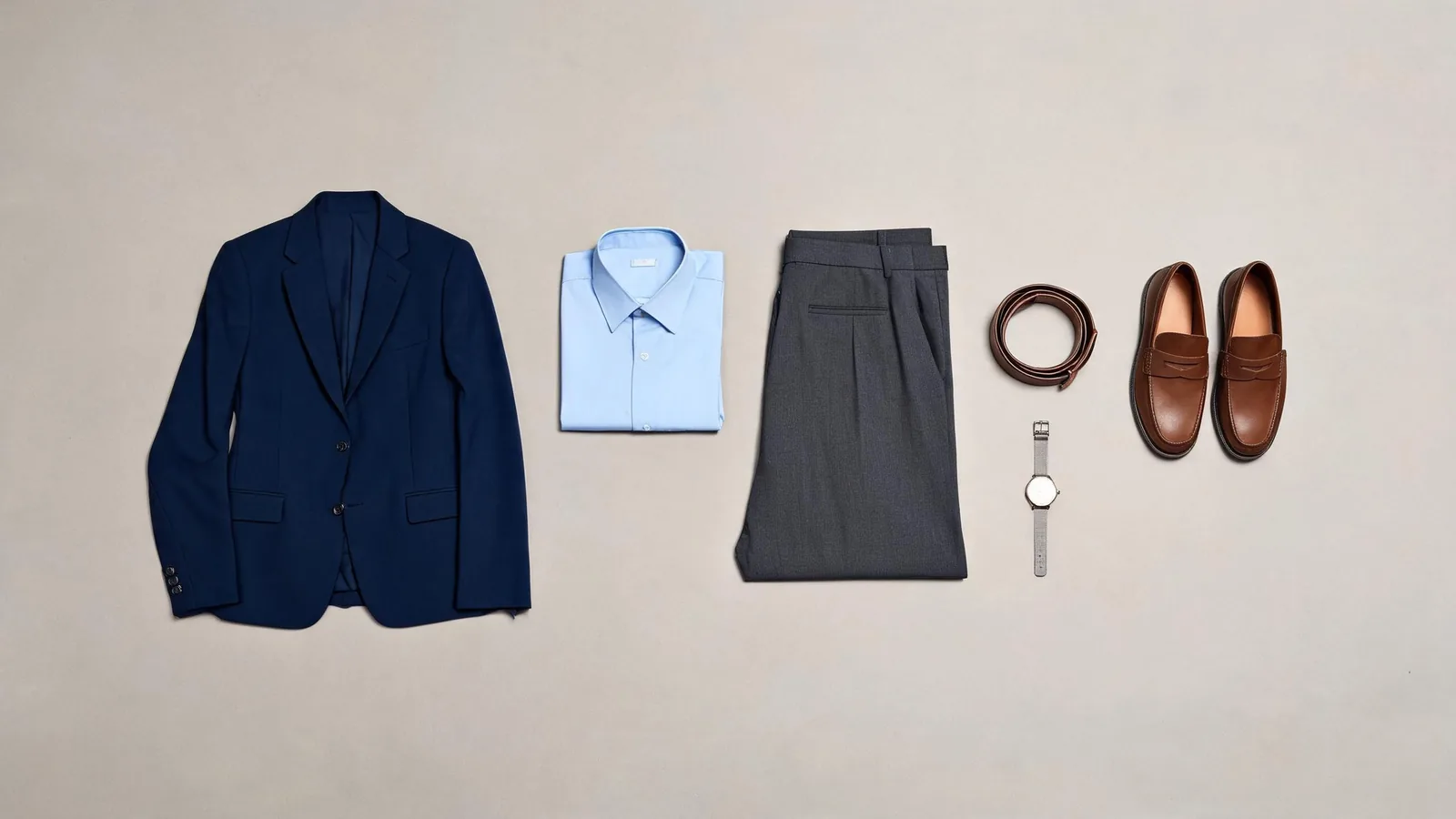
A quiet, well-kept outfit can be assembled from ordinary staples; comfort and restraint matter more than buying something new.
What to avoid before you leave
The clearest rule is to avoid anything that looks unprepared, overly casual, or designed to command attention. Courts may have local restrictions, so this list is a common-sense backstop rather than a substitute for their guidance.
- Dirty, torn, or visibly damaged clothing
- Shorts, beachwear, flip-flops, and sleepwear
- Clothing with slogans, large graphics, or messages that may distract
- Hats, sunglasses, or headphones inside the courtroom unless a court official says otherwise
- Strong fragrance or accessories that make noise
- A brand-new outfit that you have not tried sitting, walking, and waiting in
For court-specific guidance, consult the relevant court rather than relying on social media advice. The Washington courts' self-help material advises clean, mended clothing that does not draw undue attention. That is a useful example, not a universal rule.
Preview a conservative outfit without overthinking it
If your closet has plenty of pieces but no obvious combination, start with one neutral formula: navy or gray trousers, a light collared shirt or plain blouse, a simple layer, and clean closed-toe shoes. You can compare a few conservative combinations with the AI outfit generator, then choose only from clothing you actually own or intend to buy.
Keep the limitation in view: an image preview cannot tell you whether a garment fits, whether the color matches the real fabric, or whether your courthouse has a particular rule. It is most useful for narrowing your choices before you confirm the practical details.
Watch a court-attire walkthrough
This video shows examples of conservative court attire and common items to skip before a hearing.
A calm final check before the courthouse
Set out your clothes the evening before, then use this short list:
- Is every item clean, intact, and comfortable enough for sitting and waiting?
- Does the outfit avoid messages, graphics, or features likely to distract?
- Are your shoes closed-toe and easy to walk in?
- Do you have a simple layer for a cool room?
- Have you checked the notice, court website, or lawyer's instructions for local requirements?
That is enough. A respectful outfit helps remove one small uncertainty from a day when your attention belongs on the proceedings.
Frequently asked questions
Do I have to wear a suit to court?
Usually, no. A clean collared shirt or conservative blouse with pressed trousers, a modest dress, or a simple blazer is a sensible baseline when local guidance does not call for something more formal. Check your court's rules or your lawyer's advice first.
Can I wear jeans to court?
Some courts accept dark, clean jeans, while others discourage them. Pressed trousers, chinos, or a conservative skirt are the safer choice when the court's guidance is unclear.
What shoes should I wear to court?
Choose clean, closed-toe shoes that you can walk and wait in comfortably. Avoid flip-flops, very casual slides, or footwear that is dirty, damaged, or likely to draw attention.
What should I avoid wearing to court?
Avoid clothing that is dirty, torn, very casual, revealing, or covered with slogans or graphics. Court-specific rules may also restrict hats, shorts, and other items, so read your notice before you go.
Related guides
- Try the free AI clothes changer →
- AI outfit generator: explore outfit ideas
- Put a suit on your photo with AI
- What to wear for jury duty
Plan the outfit, then follow the court's rules
Use a neutral, comfortable outfit as your starting point and give local instructions the final word. Preview a conservative look on your photo if it helps you decide, then arrive in clothes that let you focus on the day ahead.