
What to Wear to a Formal Wedding: Guest Outfit Guide
Decide what to wear to a formal wedding with dress, suit, and trouser options, plus practical checks for the venue, season, shoes, and invitation.
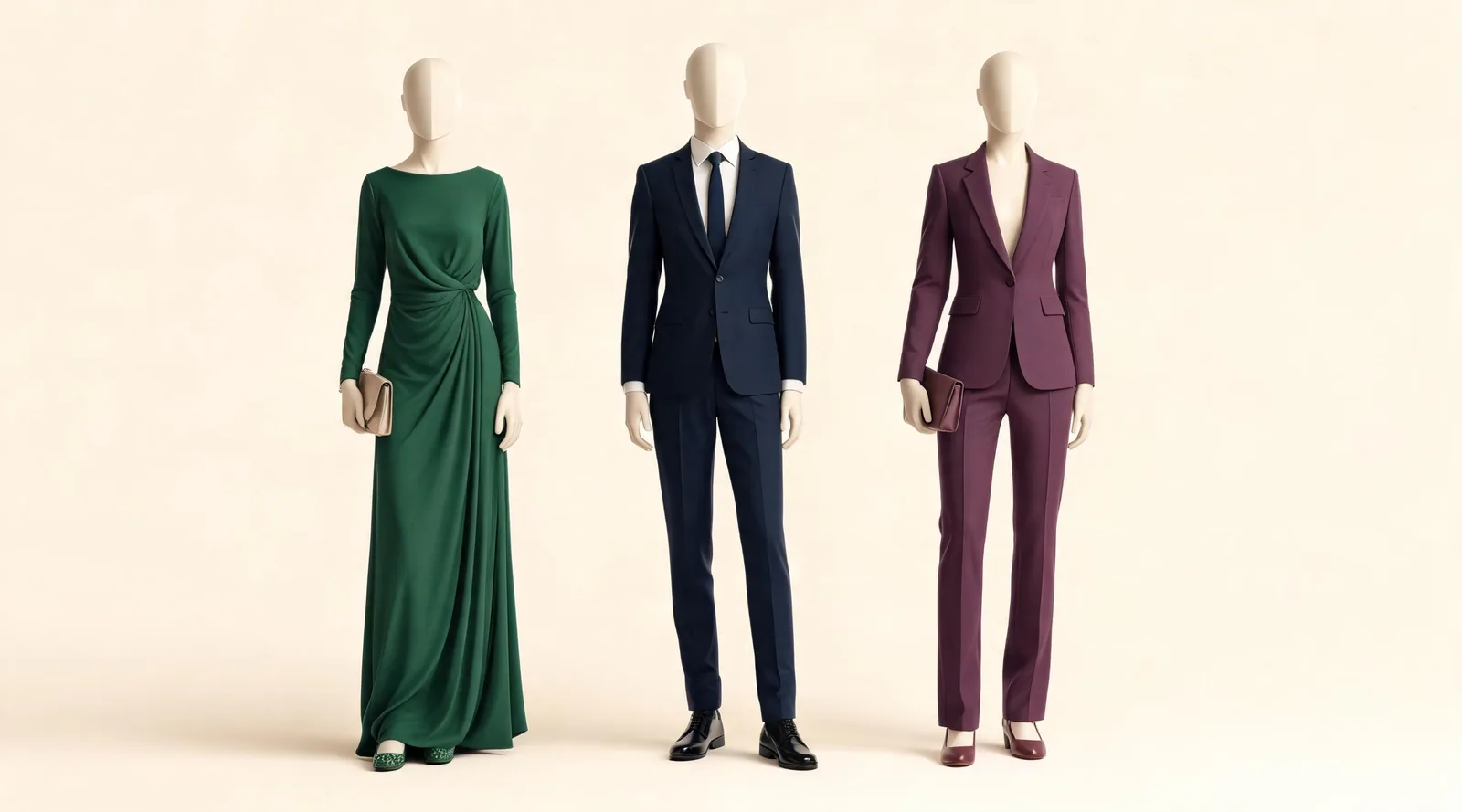
For a formal wedding, start with an evening dress or a dark suit with a dress shirt and tie. A polished trouser suit can also work. Follow the invitation's specific instructions, then adjust for venue and weather. The AI clothes changer can help visualize options, but the host sets the dress code.
Last updated: October 10, 2026 · ~9 min read
What does “formal” mean on a wedding invitation?
Formal means you should arrive in a complete, dressed-up outfit. It does not automatically mean everyone needs a tuxedo or a ball gown. In its formal wedding attire guide, The Knot places formal between cocktail and black tie. Treat that as a starting point, then read any extra guidance from the couple.
The most useful detail is often beside the dress-code label: an evening reception, a ceremony with a coverage requirement, or a request for certain colors. A couple may use “formal” differently from a clothing retailer. Their wedding website and direct instructions take priority over a generic shopping category.
The Emily Post Institute's wedding guest attire guidance distinguishes daytime and evening formal clothes. It allows dressier afternoon options by day, and evening dresses or dressy cocktail dresses according to local custom at night. That variation is why dress length alone cannot decide whether an outfit works.
If you are uncertain, ask a concrete question early: “Would a dark suit and tie work?” or “Is a dressy midi appropriate, or are you hoping for floor-length dresses?” A photo of the actual outfit is more helpful than asking whether “something fancy” is enough.
Formal, black tie, cocktail: which outfit belongs where?
Use the exact wording before considering the venue's mood. A beach location does not cancel a formal instruction, and a grand hotel does not turn a cocktail invitation into black tie.
| Invitation wording | Useful starting point | What to confirm |
|---|---|---|
| Formal | Evening dress, dressy separates, or dark suit and tie | Daytime versus evening expectations and any examples from the couple |
| Black tie optional | Tuxedo or a formal dark suit; an evening outfit | Whether the hosts encourage full evening dress |
| Black tie | Tuxedo and formal evening dress | Any cultural or creative variation specified by the hosts |
| Cocktail | Dressy cocktail-length outfit or suit | Venue, weather, and ceremony requirements |
| Semi-formal | Polished occasion clothes with more flexibility | How dressed up the couple expects guests to be |
For the stricter category, the Emily Post black-tie guide explains the distinction between black tie and black tie optional. If your invitation says black tie, do not assume the optional version applies just because you already own a suit.
Want to see the difference in outfit direction? The black-tie outfit tool can illustrate a formal evening look. If your invitation actually says semi-formal, the semi-formal wedding outfit tool is the closer starting point. Neither tool decides whether the host will accept a particular garment.
Choose a dress by fabric and finish, then length
A floor-length evening dress is a straightforward choice for many formal evening weddings. A dressy midi may also fit the occasion, especially in the daytime or when the couple's examples include shorter dresses. Look at the whole outfit: fabric, shape, shoes, outer layer, and accessories.
A long cotton sundress can still read casual. A simple midi in an evening fabric with polished shoes can look more dressed up. Before buying, inspect the retailer's fabric description and close-up photographs rather than relying on the word “formal” in the product title.
For an easy outfit formula, try a solid-color evening dress, comfortable dress shoes, a small bag, and one piece of jewelry you enjoy wearing. Keep the styling manageable. If the dress has an elaborate neckline or strong pattern, adding several competing accessories may make it harder to coordinate.
Check the practical details in a mirror. Can you sit without pulling at the neckline? Does the hem stay clear of the floor in your chosen shoes? Can you raise your arms for a hug? A dress that works only while standing still is a poor choice for a long celebration.
Bring the layer you will actually wear. A wrap, tailored jacket, or dress coat should work with the outfit when you arrive and when the temperature drops. Try it on with the dress beforehand; a last-minute casual coat can change the look more than a different necklace would.
Put together a dark suit without making it look like workwear
For a formal wedding that permits suits, start with a matching navy, charcoal, or black jacket and trousers. Add a dress shirt, tie, polished dress shoes, and socks that work with the trousers. The outfit should look complete while you are wearing the jacket.
Fit and condition matter more than accumulating accessories. Check the shoulders, sleeve length, trouser break, and whether the jacket pulls when buttoned. If you already own a suitable suit, allow time for pressing and any alterations before ordering a new one.
Avoid trying to rescue casual pieces with one formal accessory. A tie does not necessarily make chinos and an unrelated blazer meet a formal invitation. Similarly, clean trainers may suit some weddings, but they are a choice to confirm rather than the default for this dress code.
A pocket square is optional. You do not need a vest, decorative lapel pin, or several accessories to make a dark suit look intentional. Choose a coordinated shirt and tie, then check the result in daylight so subtle color clashes are easier to spot.
If the event specifies black tie, review tuxedo requirements before renting. Tell the rental shop the actual invitation wording and event date. Try the complete outfit, including shoes, before the wedding day rather than discovering a missing or unsuitable piece when you are leaving.
Can you choose a trouser suit or jumpsuit?
You can build a formal outfit around trousers. The key is an evening look that respects the couple's expectations, rather than an everyday office outfit with different shoes. A coordinated tailored suit, dressy blouse, or structured jumpsuit gives you a useful starting point.
Pay particular attention to fabric and the line of the trousers. Try the outfit with its intended shoes so you can check the hem. If you use a contrasting top, make sure it still looks deliberate with the jacket removed, since you may take it off while seated or dancing.
Think through bathroom access and movement when choosing a jumpsuit. Fasten it yourself during the fitting, sit down, and walk up a step. These checks are easy to skip in a changing room and much harder to solve at the reception.
Traditional formalwear descriptions often divide clothing by gender. Use the garment category that suits you, while following the event's level of formality and any ceremony requirements. If the hosts have provided a mood board, compare your whole outfit with its dressiness rather than copying one exact item.
Adapt to the season without lowering the dress code
Weather changes the materials and layers you choose. It should not be the reason to ignore the invitation. Think about the full route from arrival through ceremony, reception, and travel home.
| Setting | Practical adjustment | Check before you leave |
|---|---|---|
| Hot daytime celebration | Breathable dressy fabric and a manageable layer | Comfort outside and in air-conditioned rooms |
| Outdoor ceremony on grass | Stable dress shoes or elegant flats | Whether heels sink and hems drag |
| Autumn or winter reception | A coordinated warm layer | Coat storage and the walk from transport |
| Indoor evening wedding | An evening outfit with suitable shoes | Sitting, dancing, stairs, and temperature changes |
| Destination wedding | Clothes that travel well | Pressing options, luggage space, and ceremony guidance |
For outdoor events, test your shoes on a similar surface if possible. A low block heel may be easier to manage than a thin heel on grass. Formality does not require you to choose shoes you cannot walk in; polished flats can be a sensible part of an intentional outfit.
For travel, lay out everything together before packing. Include the belt if needed, the right socks, the layer, and any small fastening accessories. Photograph the complete set for your own reference. It is easier to notice a missing item at home than in a hotel room before the ceremony.
Which colors and outfit details should you avoid?
Start with explicit requests from the couple. If they ask guests to avoid a color, wear a particular palette, or respect a ceremony tradition, follow that instruction. Do not assume that a rule from another wedding applies to this one.
When the couple has not invited guests to wear white, avoiding an outfit that looks bridal is a considerate default. Very pale colors deserve a daylight check because an ivory or near-white dress may photograph differently from its shop image. Ask before wearing a borderline option instead of relying on the color name.
Black is an option in many contemporary wedding settings, but there is no universal color rule across cultures and families. Likewise, bright colors and prints can be appropriate when they match the event. Local customs, religious guidance, and the hosts' preferences matter more than a blanket list of forbidden shades.
Avoid styling that requires constant adjustment. Loose straps, shoes that rub, or a bag too small for essentials are problems you can catch before the day. Prepare the complete outfit once, then stop shopping for minor upgrades that do not solve a real issue.
Make the final decision in three steps
- Confirm the instruction. Read the invitation and wedding website together. Note ceremony coverage, colors, venue, and time. Resolve any ambiguity with one specific question to the host.
- Try on the complete outfit. Include shoes and the outer layer. Sit, walk, reach, and inspect hems and fastenings. Check condition and allow time for repairs or pressing.
- Choose between suitable options. Once both outfits meet the dress code, decide by comfort, coordination, and what you already own. Keep a practical backup for weather or travel.
If your remaining question is visual, the wedding guest outfit tool can help compare a couple of outfit directions on your photo. Use a clear photograph of yourself or an adult who has agreed to the edit. Treat the result as a planning illustration, then check actual garment measurements and fabric in person.
A picture can help you choose between navy and emerald. It cannot tell you whether a waistband is comfortable, a fabric will crease, or a hem will catch on stairs.
AIClothSwap publishes this guide and offers the linked outfit tools. The advice above is a dress-code planning framework, not a claim that an image preview establishes physical fit or replaces the couple's instructions. The cover is an illustration of outfit categories.
Frequently asked questions
Does formal wedding attire mean black tie?
Not automatically. Formal often allows a dark suit and tie instead of a tuxedo. If the invitation explicitly says black tie, follow that more specific instruction. Ask the host when the wording combines several dress codes.
Can I wear a midi dress to a formal wedding?
A dressy midi can work, particularly for a daytime celebration or when the host accepts cocktail-length dresses. Choose an evening fabric and polished accessories. For a very formal evening reception, a floor-length dress is the safer starting point.
Can I wear trousers instead of a dress?
Yes, a tailored evening trouser suit or dressy jumpsuit can be a practical choice when it meets the host's expectations. Look for a coordinated outfit, an intentional fabric, and polished shoes rather than casual separates.
Do I need to buy a new outfit for a formal wedding?
No. Check whether an outfit you own meets the invitation, fits comfortably, and is in good condition. Alterations, pressing, suitable shoes, and a coordinated layer may solve the problem without a new outfit.
Related guides
- Compare outfit ideas with the AI clothes changer
- Wedding guest outfit ideas
- Black-tie outfit ideas
- Wedding guest outfit preview guide
Choose an outfit that meets the invitation first. If color or silhouette is still undecided, preview an outfit direction before you shop.