Free AI Clothes Changer Without Sign-Up: What to Check First
Looking for a free AI clothes changer without sign-up? Use this practical checklist to compare access, photo handling, result limits, and realistic expectations before you upload.
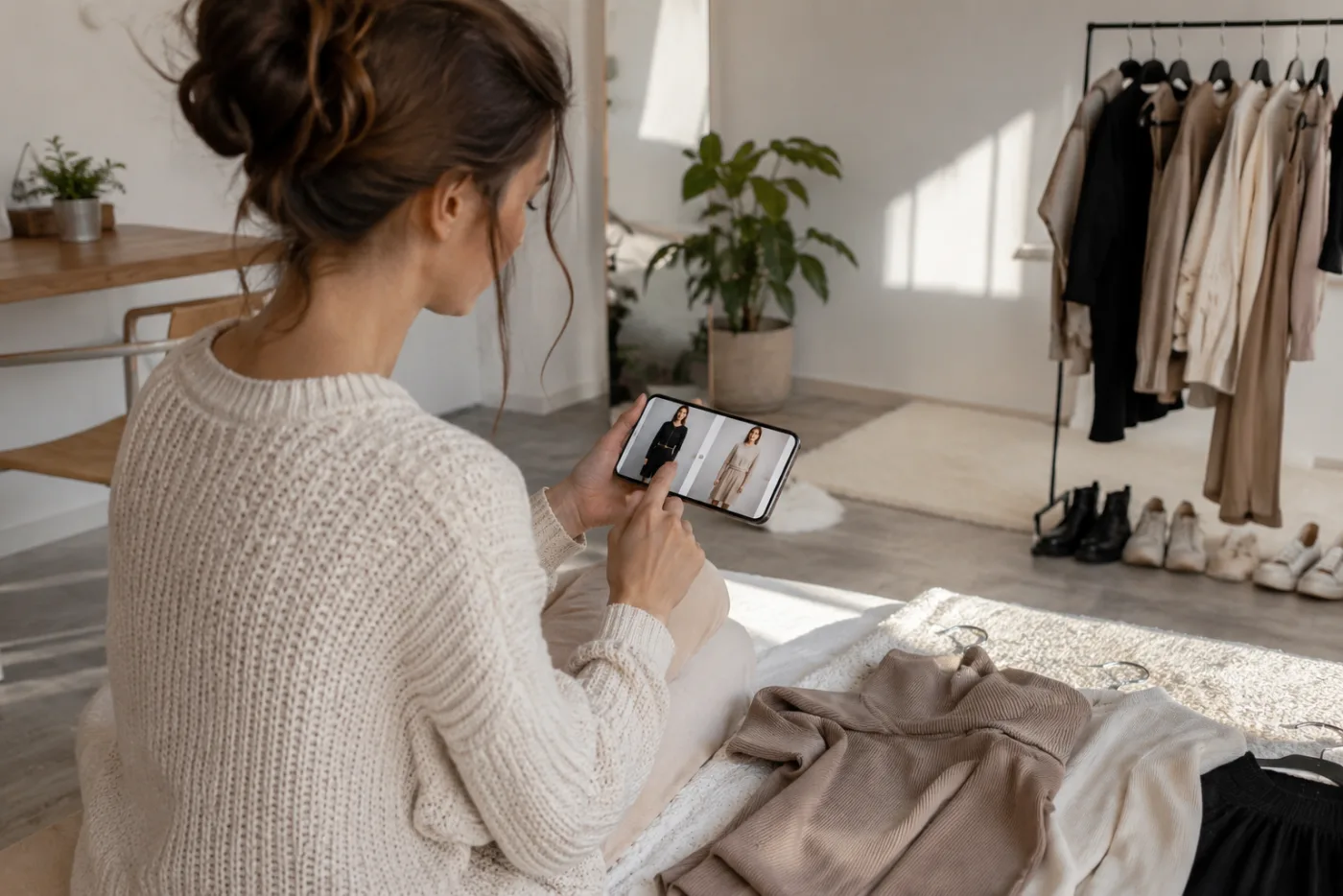
A free AI clothes changer without sign-up is useful when you need a quick visual answer, not when you need a guarantee about size, fabric, or a product you can buy. Before you upload a photo, check what the tool asks for, what a free result actually includes, and whether the preview answers the decision in front of you. You can start an AI clothes changer when you want to compare an outfit direction on your own photo.
Last updated: July 16, 2026 - about 10 min read
The phrase "no sign-up" sounds simple. In practice, people use it to mean several different things: no account before the first preview, no card for a trial, no watermark, no surprise paywall, or no ongoing storage of a face photo. Those are different promises. If you searched for "AI clothes changer free," this is the distinction worth checking before you upload. A useful free test does not have to do everything, but it should be clear about what it does.
This guide helps you decide whether a quick clothes-changing preview is the right next step, how to make that first render useful, and when a real fitting room, seller photo, or product page is the better source of truth.
Start with the decision, not the tool
An outfit preview works best when you can state the visual question in one sentence. "Would a navy blazer look calmer than black in this headshot?" is a good question. "Can this image prove the jacket will fit me in a different size?" is not.
Free tools are especially good for low-risk decisions:
- Comparing color families before a photo shoot.
- Testing whether a neckline or sleeve direction suits a portrait.
- Mocking up a casual, work, or event outfit for a social post.
- Exploring an outfit idea before shopping.
- Giving a designer or stylist a starting point for a conversation.
They are weak evidence for measurements, comfort, material weight, how an item moves, or whether an online listing is a real match. Keeping that line clear saves money and disappointment.
What "free" and "no sign-up" should mean to you
Use this table before you rely on any free AI clothes changer. It turns vague marketing language into questions you can actually answer.
| Check before upload | Why it matters | A reasonable outcome | Red flag |
|---|---|---|---|
| Account requirement | You may only want one quick test | The page tells you whether the first render needs an account | The requirement appears after you have prepared the upload |
| Free-result limit | A single render may not be enough to compare options | The number of starter or daily tries is visible | "Free" with no explanation of what is included |
| Download or watermark | You may need a private decision image, not a public asset | The result and any download restriction are clear | A watermark or paywall only appears after generation |
| Photo handling | A portrait is personal data | The site explains retention, deletion, and training practices | No privacy or terms path is available |
| Edit scope | It tells you whether the result can answer your question | Clothing, color, and styling direction can be tested | The tool quietly changes face, body, or background too |
| Result ownership | Important for a shop, client, or campaign | Terms explain commercial or personal use separately | The tool suggests rights it does not document |
The table is not a legal checklist. It is a way to avoid assuming that one word, "free," covers every part of a workflow.
Make the first preview worth the attempt
If you only have one or two free tests, do not spend them on a crowded photo and a five-part prompt. Start with the cleanest available image: one visible person, shoulders or more of the outfit in frame, even lighting, and no hands blocking the clothing.
Then change one decision at a time. Ask for a different jacket color, a more formal outfit, or a new sleeve shape. Do not combine all of those with a new pose, different location, and altered hairstyle. When too many variables change, you cannot tell which choice you actually prefer.
For a work-photo test, you might write: "Keep my face, pose, lighting, and background the same. Change only the top layer to a structured navy blazer over a simple light shirt." For an event idea, specify the mood and garment shape, then preserve the rest of the photo. Specific constraints produce a comparison, not just a surprise image.
A quick preview is most useful when one visual variable changes while the rest of the photo stays stable.
What an outfit preview can show accurately enough
An AI-generated outfit image can be a strong planning aid. It can show whether a general color, silhouette, neckline, layering direction, or styling mood feels coherent with your photo. It can also help you rule out an idea quickly. If a high-contrast formal jacket feels wrong on your own image, you do not need to buy it just to discover that.
The most reliable use is comparative. Look at two or three controlled versions and ask which one makes the visual message clearer. A profile photo may need calm contrast. A party invitation image may need more color. A product mockup may need a clean wardrobe that does not distract from the product.
For outfit matching, pair this with the outfit color matcher. For a more deliberate color-only experiment, use the clothes color changer. The narrower the request, the easier it is to inspect the result.
What it cannot prove
Generated clothing is an interpretation of an image. It cannot act as a fitting-room measurement or a substitute for a product description. It does not know your garment size, the actual stretch of a fabric, the lining, the weight of a coat, or how a real item will sit when you walk or sit down.
It also cannot tell you whether an item from a particular store will look identical. A visual direction can be useful: "I like a soft camel trench with this outfit." That is different from: "This exact trench will fit and look like the result." Treat the first as inspiration and the second as a claim you still need to verify with seller images, reviews, and return terms.
This distinction matters most for formalwear, structured tailoring, transparent fabric, logo-heavy items, and clothing where exact drape is the point. A beautiful generated result can still be the wrong shopping decision if the real garment has different proportions or material behavior.
A simple first-test workflow
- Choose one clear photo. Avoid a group shot, a very dark image, or a picture where the outfit is hidden.
- Name one decision. Color, formality, layering, or garment type is enough for the first run.
- Preserve what should not change. Face, pose, background, and lighting should remain fixed when you are comparing clothes.
- Generate a second controlled version. Change only the decision you are testing, such as navy versus charcoal.
- Inspect the clothing edges. Check collars, cuffs, hands, hair overlap, buttons, and shadow direction.
- Use the result as a shortlist. Keep the direction you prefer, then verify real products separately.
That last step is the difference between a useful free preview and false certainty. The result should reduce options, not pretend to close a purchase decision by itself.
Common mistakes that make a free result less useful
Treating every free tool as the same product
Some tools are built for a quick mockup, others for color edits, virtual try-on, product imagery, or fashion catalog work. Read the page you are on. A no-sign-up preview may be perfect for trying a color direction and unsuitable for a multi-SKU ecommerce workflow.
Asking for a complete life makeover
When a prompt changes clothing, body shape, hair, makeup, location, and camera angle at once, you are evaluating a fictional scene rather than an outfit. Keep the test narrow enough that your original photo remains recognizable.
Forgetting privacy because the task is small
One portrait still deserves the same care as any uploaded image. Use a service with clear policies, avoid uploading someone else's photo without permission, and do not use a generated result to misrepresent another person.
Calling a preview a product photo
For a shop, an AI image can support early creative direction, campaign concepts, or an internal layout. It should not replace accurate product photography when color, texture, fit, branding, or compliance need verification. The clothing color variant QA checklist explains the checks worth doing before publishing an ecommerce image.
FAQ
Is an AI clothes changer free to use without creating an account?
That depends on the individual tool and its current flow. Check the upload and result steps before you rely on it. The important question is not only whether an account is required, but what a free result includes and how the photo is handled.
Is a free AI clothes changer accurate?
It can be accurate enough to compare styling direction, color, neckline, layering, and general mood. It is not accurate enough to guarantee garment size, comfort, exact fabric behavior, or a real product match.
What photo should I upload?
Use a clear photo with one visible person, even lighting, and the relevant clothing area unobstructed. Keep the face, pose, lighting, and background stable if you want to compare outfits fairly.
Can I use the result for shopping?
Use it to make a shortlist or identify a direction you like. Before buying, verify fit, fabric, seller images, reviews, and return conditions on the real product page.
Use a free preview with the right expectations
A free AI clothes changer without sign-up can be a fast way to test an outfit idea, especially when you treat the result as a visual comparison rather than a promise. Start with one clean photo, test one variable, inspect the result, and let the preview guide the next real-world check. When you are ready to compare an outfit on your own image, start with the AI clothes changer.