What to Wear to a Passport Photo (Rules + Preview It With AI)
What to wear to a passport photo: a solid mid-tone top, never white, no busy patterns or glasses. Preview a compliant top on your own photo with AI.
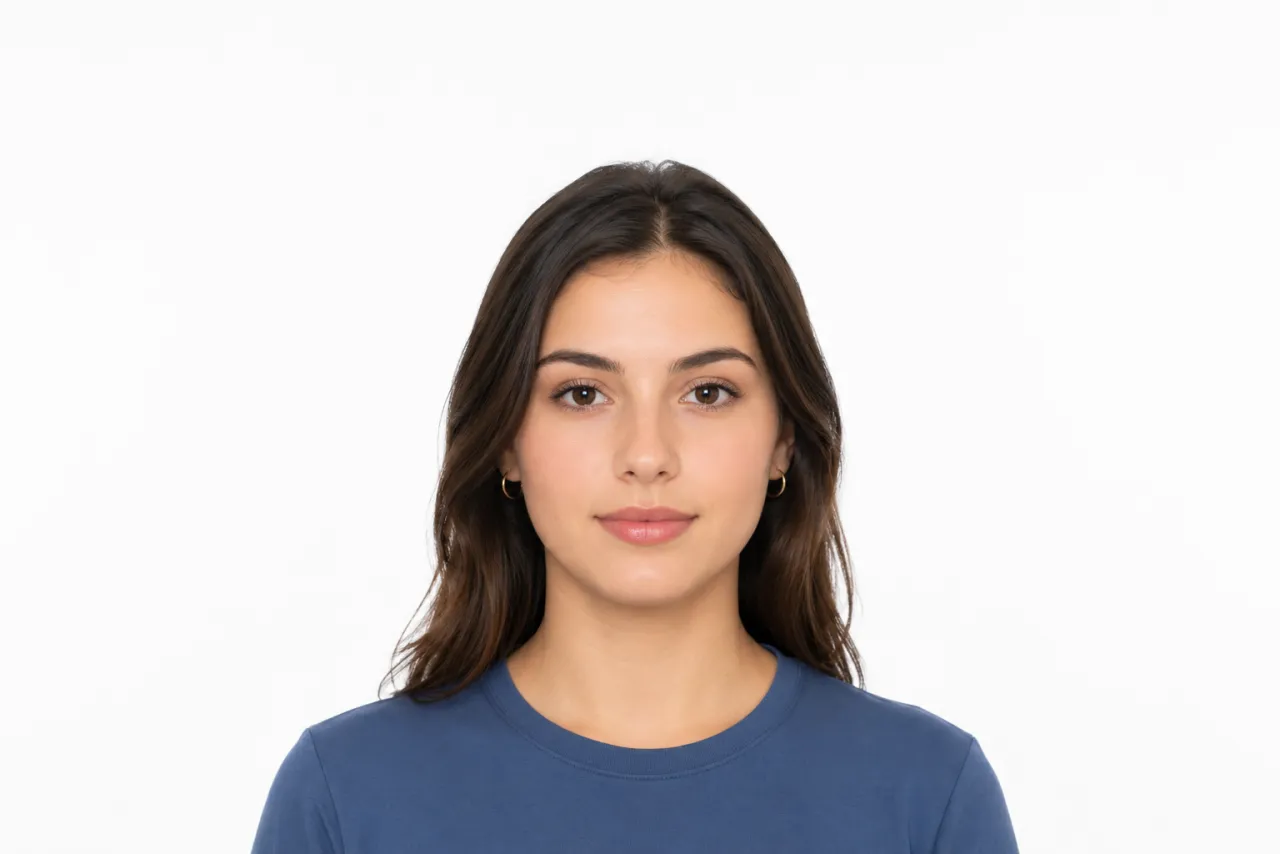
For a passport photo, wear a solid, mid-tone top with a modest collar — think mid-blue, grey, or burgundy. Skip white (it blends into the white background), busy patterns, hats, and glasses. Want to test a top before you reshoot? Preview one on your own photo with an AI clothes changer in about a minute. Most countries follow the same core rules, but a few details vary, so always check your own government's guidance.
If you searched what to wear to a passport photo, you've probably already taken one shot, squinted at it, and wondered if your white shirt or favorite striped top is going to get rejected. Below: the dress code rule by rule, the colors that photograph cleanly, and a quick way to preview a passport-safe top on your photo before you commit to a reshoot.
Last updated: June 24, 2026 · ~7 min read
The passport-photo dress code, rule by rule
A passport photo has one job: read as you against a plain, light background, with nothing distracting the human (or the machine) that checks it. That's a different brief from a LinkedIn headshot — here, plainer always wins. So here's what to do and what to skip.
| Element | Do | Don't |
|---|---|---|
| Color | Solid mid-tone — blue, grey, green, burgundy, navy | White or very pale tops that merge into the background |
| Pattern | Plain, single color | Busy prints, stripes, logos, slogans, or text |
| Neckline | Modest collar or a normal crew/round neck | Strapless, very low-cut, or off-the-shoulder |
| Glasses | Take them off (US, UK, and most countries) | Tinted, reflective, or thick frames that hide your eyes |
| Hats / head coverings | Only for religious or medical reasons, with face fully visible | Caps, beanies, or fashion hats covering any part of your face |
| Uniforms | Everyday clothes | Military, work, or camouflage uniforms (rejected in the US and UK) |
Three of these trip people up the most, so they're worth spelling out:
- Glasses are out almost everywhere now. The US banned eyeglasses in passport photos back in 2016, and the UK tells you to take them off unless you really can't. If you genuinely can't, you'll usually need a doctor's note, your eyes have to stay visible, and there can be no glare on the lenses.
- No uniforms or camouflage. That covers work uniforms that look official, plus anything that reads as military or law-enforcement style. Plain, everyday clothing is the safe call.
- Religious and medical head coverings are fine, as long as your full face shows from the bottom of your chin to the top of your forehead.
Why no white? Passport photos are shot against a plain white or off-white background. A white top has almost no contrast with that backdrop, so your shoulders vanish and the photo can get rejected for not clearly showing your outline. Any mid-tone color sorts it out.
Best top colors so you don't blend into the white background
The easiest rejection to avoid is low contrast: a top that sits too close to the white background. Pick something with clear, comfortable contrast and a solid weave.
- Mid blue — the safest all-rounder. Reads cleanly on white and suits most skin tones.
- Grey (mid to charcoal) — neutral and professional without going full black.
- Navy — strong contrast, formal, photographs sharp.
- Burgundy or deep green — a touch of color that still stays plain and modest.
- Black — fine in most countries. Some prefer a hint of mid-tone so you don't merge into shadows, so check your local guidance if your background runs darker.
Steer clear of white, cream, pale beige, and very light pastels. They all risk blending in. Skip neon and anything with sheen too, since shiny fabric catches the flash and creates hotspots.
Preview a passport-safe top on your photo
You don't have to change into three shirts to find the one that works. Take one good photo against a plain wall, then use an AI clothes changer to swap the top and check it against the rules above, all in your browser.
- Upload a clear, front-facing photo. Even lighting, plain background, shoulders visible, neutral expression with your mouth closed. The cleaner the original, the more natural the swap.
- Swap to a plain, mid-tone top. Pick or describe something simple, like "plain mid-blue crew-neck top" or "solid grey collared shirt, no pattern." Keep it modest and single-color so it clears the dress code.
- Check the result against the rules. Make sure the top is solid (no pattern or logo), contrasts with the background, and has a modest neckline, and that you're not wearing glasses or a hat. Re-run with a different color if you want to compare.
This is a preview tool, not a replacement for an official photo. The final passport image still has to meet your country's exact size, background, and expression rules. What it saves you is the changing-clothes-and-reshooting loop just to learn that a color blends in.
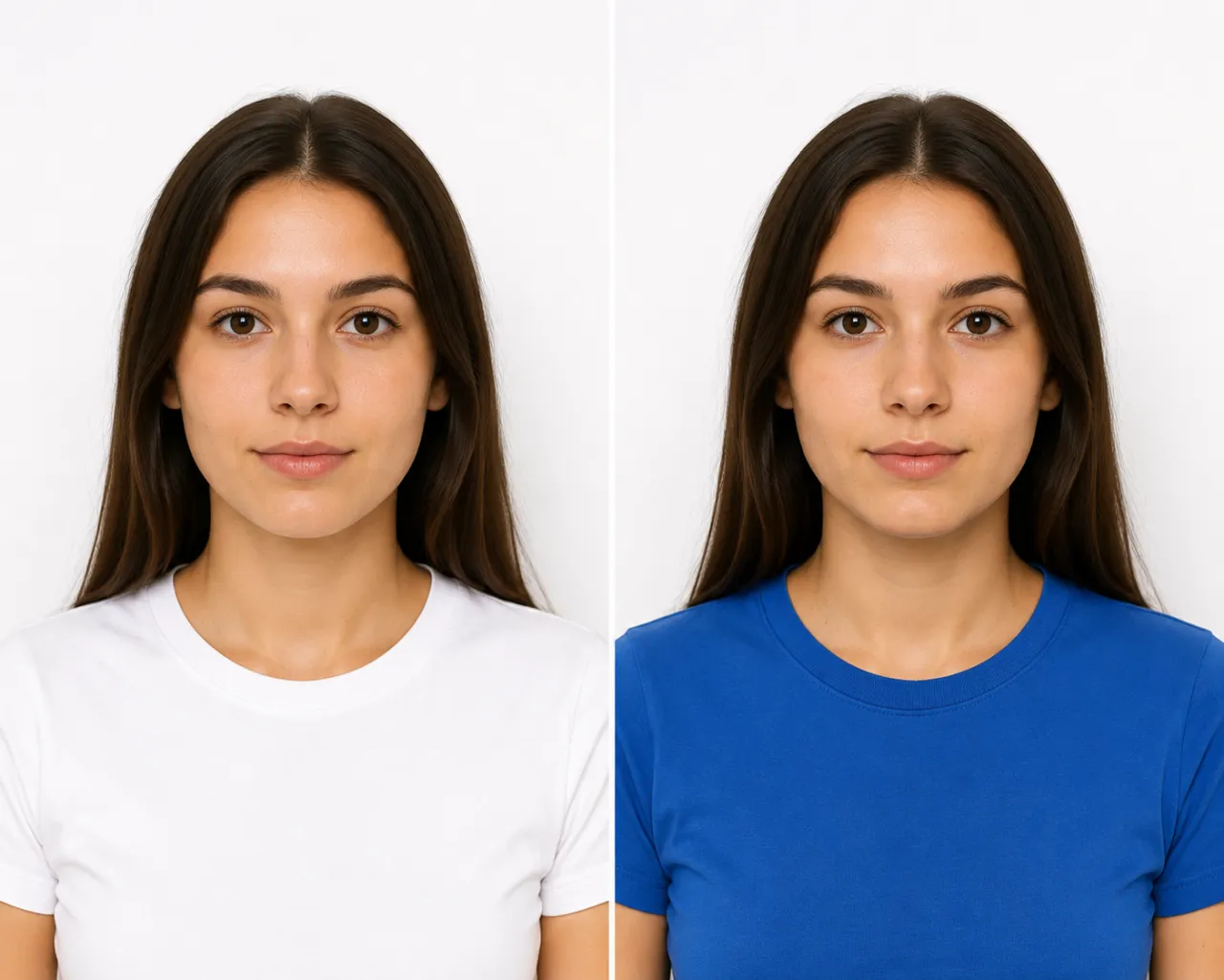
Left: a white top vanishes into the white background. Right: the same photo with a mid-blue top that contrasts cleanly — the passport-safe choice.
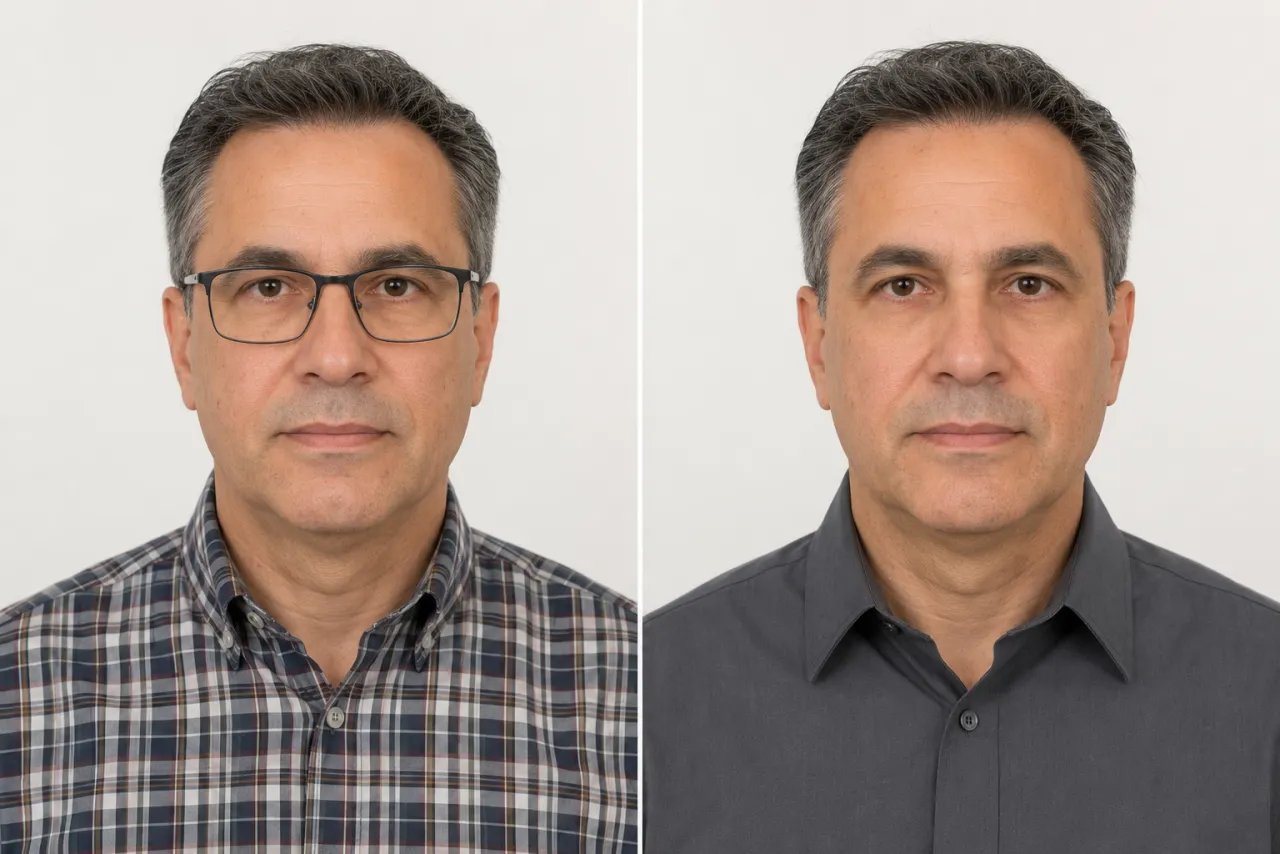
From a busy pattern and glasses to a plain charcoal top with the glasses off — a compliant, distraction-free look.
Quick pre-photo checklist
Run through this before you press the shutter, or before you upload to a photo booth app:
- Top: solid, mid-tone color — not white, not pale, no pattern, logo, or text.
- Neckline: modest collar or normal crew neck; nothing strapless or very low-cut.
- Glasses: off (US, UK, and most countries).
- Head: no hat or cap unless it's for religious or medical reasons, with your full face visible.
- No uniforms — everyday clothes only.
- Background: plain, light, and uncluttered, with even lighting and no shadows behind you.
- Expression: neutral, eyes open, mouth closed, facing the camera straight on.
- Final check: confirm your country's exact size and format rules before you submit.
Frequently asked questions
Can I wear white to a passport photo?
It's best not to. Passport photos use a plain white or off-white background, so a white top has very little contrast and your shoulders can blend in — a common reason for rejection. Choose a solid mid-tone color like blue, grey, or burgundy instead, so your outline reads clearly against the background.
Can I wear glasses in a passport photo?
In most countries, no. The US has not allowed eyeglasses in passport photos since 2016, and the UK advises removing them. If you can't take them off for medical reasons, you'll usually need a doctor's note, your eyes must be clearly visible, and there can be no glare on the lenses.
Can I wear a uniform or a hat in a passport photo?
No to both, with one exception. Military, work, and camouflage uniforms are rejected in the US and UK, so wear everyday clothes. Hats and caps aren't allowed either — the only exception is a head covering worn for religious or medical reasons, and even then your full face must be visible.
What should a baby wear for a passport photo?
A plain, solid-color top with no pattern, just like an adult, against a plain light background. The baby's eyes should be open if possible, with a neutral expression and nothing covering the face — no pacifiers, toys, or hands in the frame. No other person can appear in the photo.
Does the background have to be white?
For most countries, yes — a plain white or off-white background with even lighting and no shadows. This is exactly why your top shouldn't be white: it needs to contrast with that background. Always check your own government's guidance, since a few countries specify a light grey or cream background instead.
Related guides
Keep exploring before you reshoot:
- Try the free AI clothes changer → — upload a photo and preview a passport-safe top on the home page.
- Put a suit on your photo: AI headshot outfit change
- How to change clothes color in a photo with AI
- AI virtual try-on: see clothes on you before you buy
Try it on your own photo
Not sure if your top will pass? Upload a photo and preview a plain, passport-safe top free → and check it against the rules before you take the official shot.